
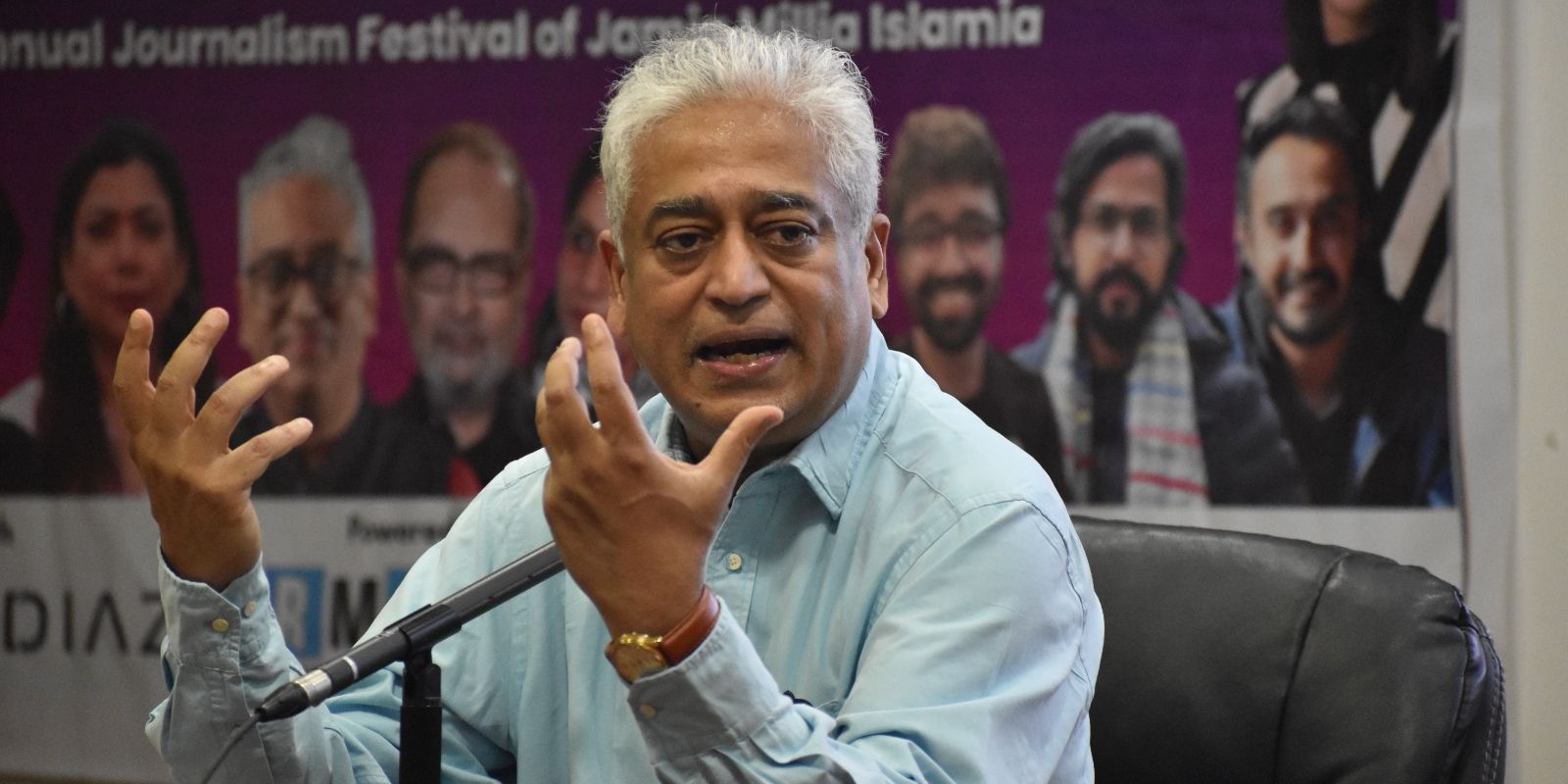
“Large section of media is a Caged Peacock”: Rajdeep Sardesai at Jamia’s Journalism Festival
New Delhi: On the 16th and 17th of February, the MA Convergent Journalism students of the AJK Mass Communication Research Centre at Jamia Millia Islamia organised their annual journalism festival titled AINAA 2026. First held in 2014, this year marked the thirteenth edition of the event, bringing together veteran journalists, newsroom leaders, and media educators for two days of discussion, debate, and critical reflection on the contemporary media landscape.
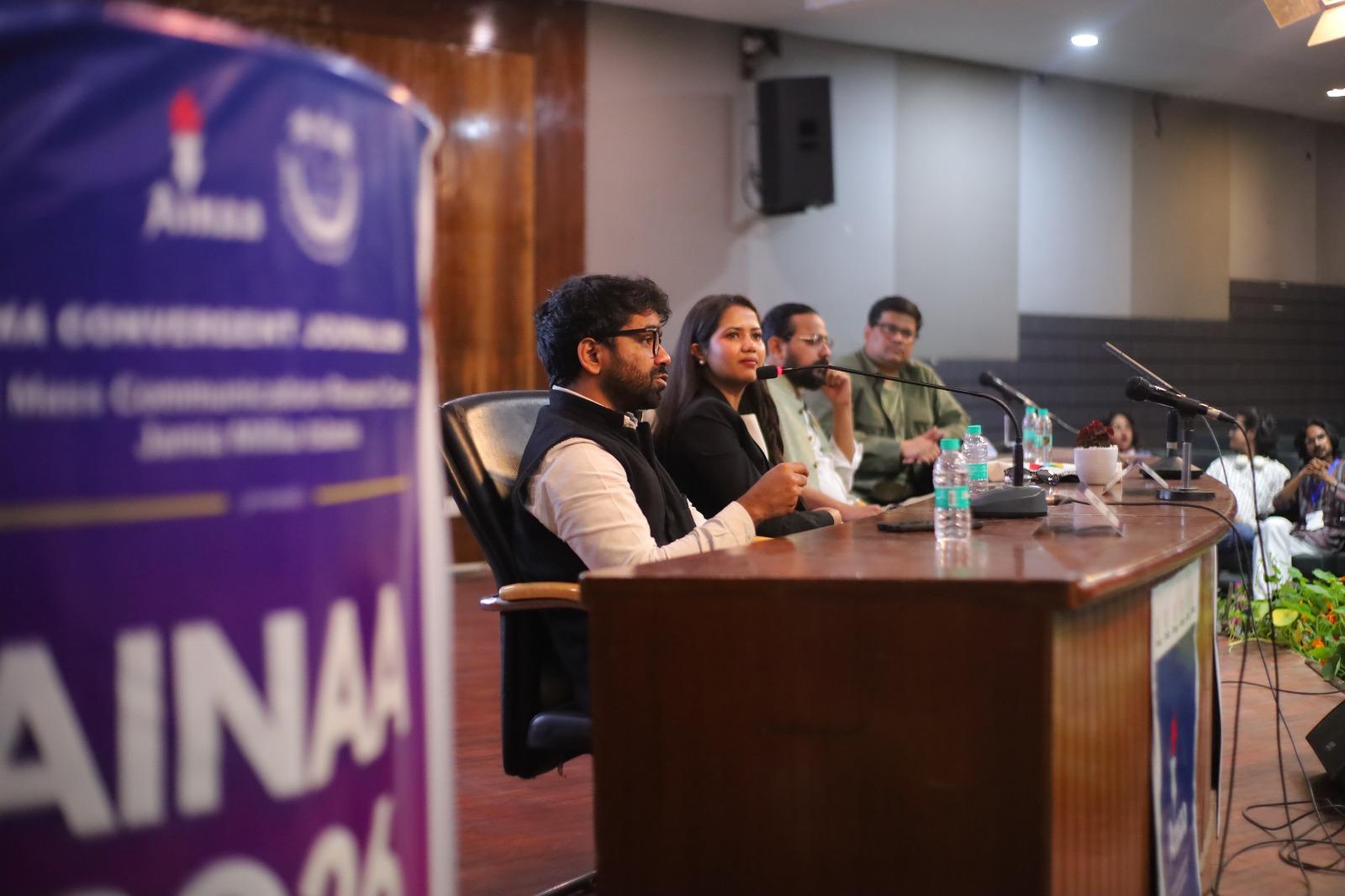
The festival began with a welcome address by Prof. Sabeena Gadihoke, Director of AJK MCRC. This was followed by opening remarks from Sadia Akhtar, the Course Coordinator for MA Convergent Journalism programme, who spoke about AINAA’s role in fostering student-led dialogue on the evolving ethics, challenges, and responsibilities of journalism.
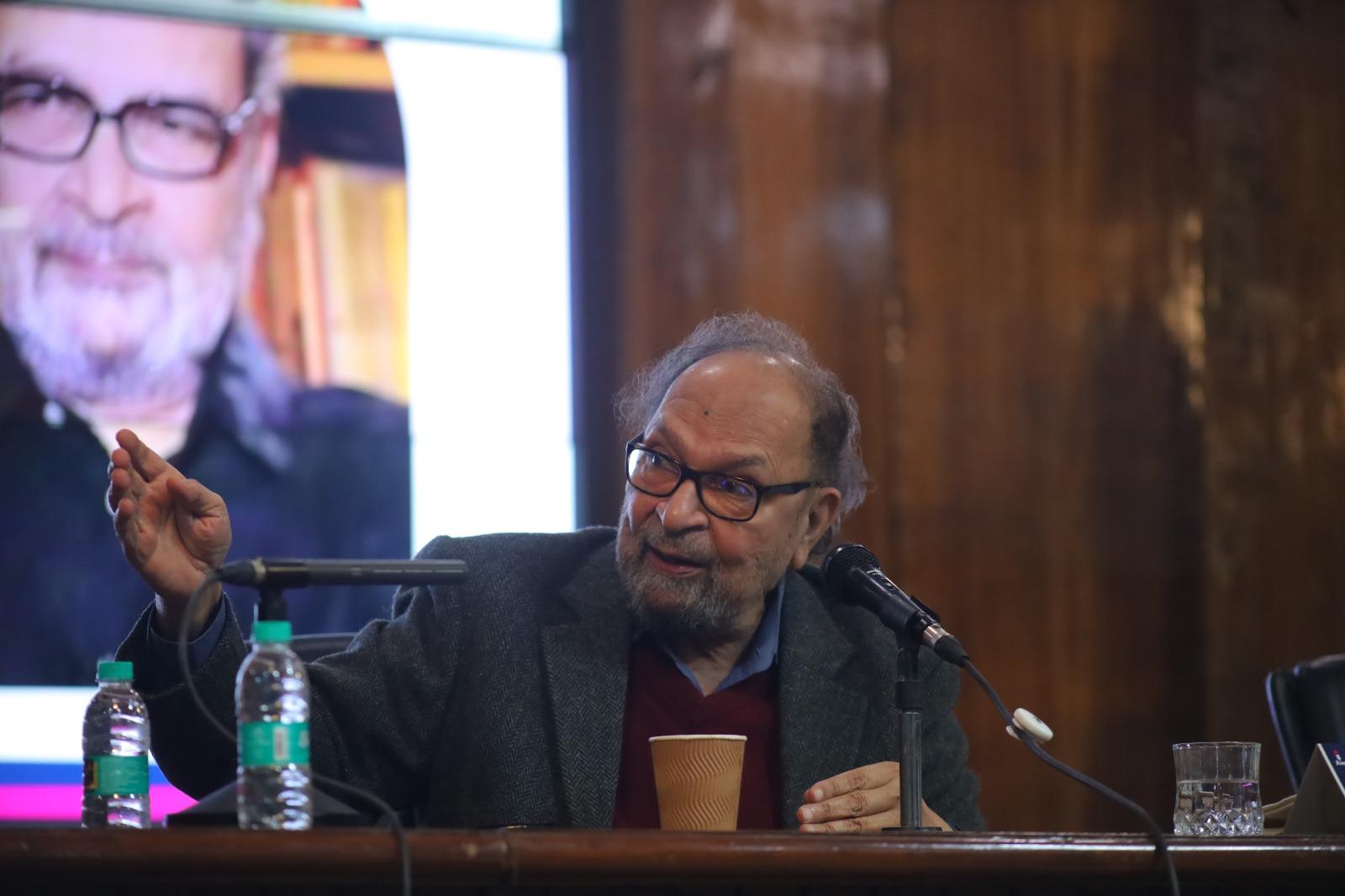
The keynote address was delivered by veteran journalist Saeed Naqvi. Speaking on “The World as I Saw It,” he reflected on five decades of reporting, talking about his experiences interviewing personalities like Nelson Mandela and working with the likes of Raghu Rai and Mark Tully. His keynote set the tone for the day by grounding students in a broader historical understanding of the craft. This session was moderated by Prof. Shohini Ghosh, senior faculty at the centre.
The first panel discussion, focused on Investigative Journalism: Changing Newsroom Priorities?, featured independent investigative journalist Poonam Agarwal and senior journalist Mariyam Alavi. The session was moderated by Shadab Moizee, who is associated with The Quint. The conversation delved into Agarwal and Alavi’s experiences investigating stories such as the Electoral Bond scheme, among others. With over two decades of reporting experience between them, the panel offered an interactive exploration of the nuances of investigative journalism—its challenges, its evolving tools, and the persistence required to pursue stories that hold power to account. The panelists also underlined the importance of institutional support and long-form investigation at a time when news cycles grow increasingly compressed.
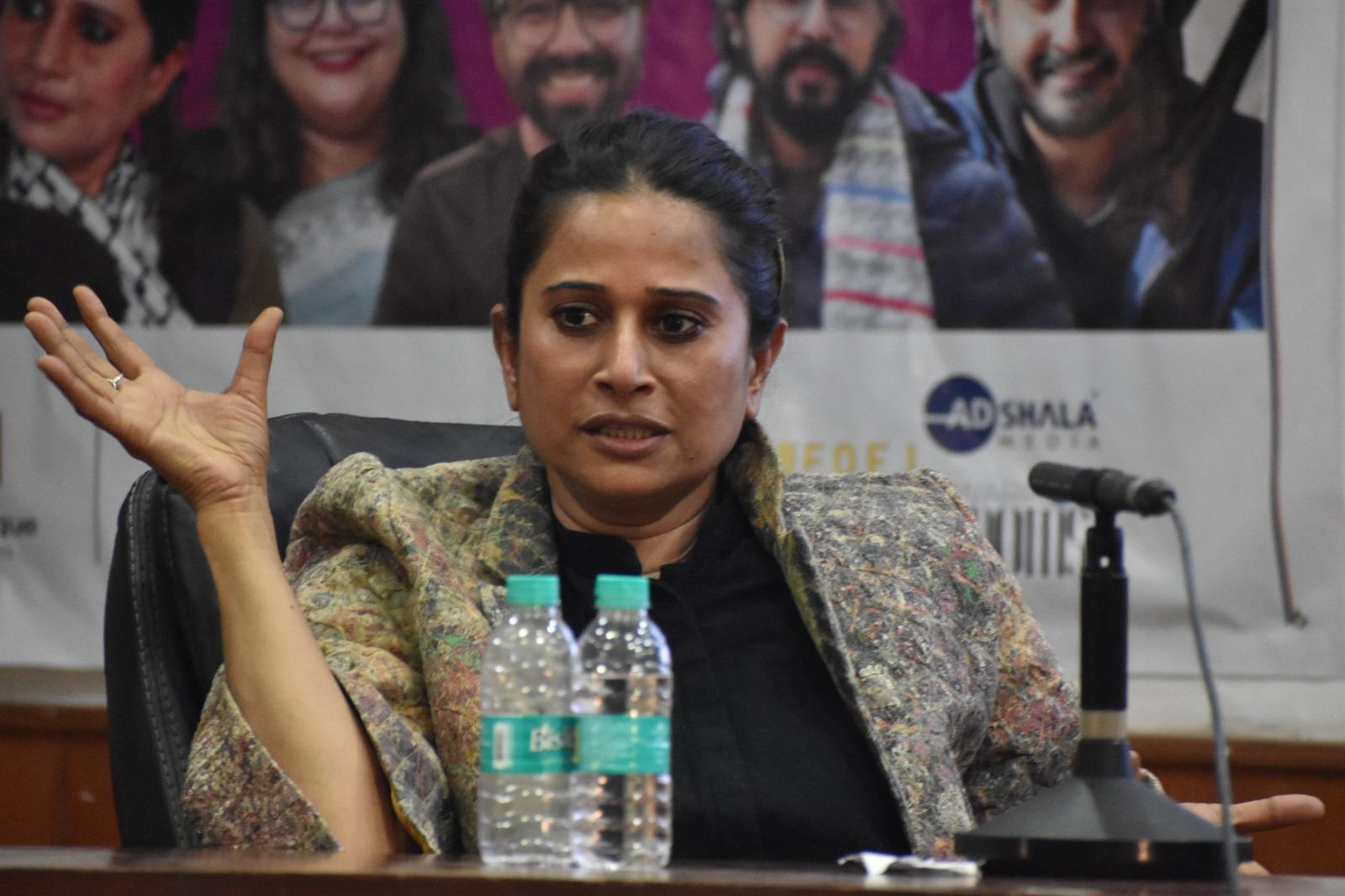
The second panel with Priyanshi Sharma of PEEK TV, Shadab Moizee, and Asad Rehman of The Indian Express discussed the theme: Is Digital the New Mainstream? The discussion addressed the rise of social media-led news consumption, the demands of multimedia storytelling, and the shifting expectations for early-career journalists in hybrid newsrooms. “Existence of fact checkers today is a shame for all journalists because it was the job of journalists to verify information which they failed to do,” said Priyanshi Sharma.
The day concluded with a conversation between senior journalist Smita Sharma and Karan Deep Singh on Between Bullets & Bylines,offering an unflinching look at frontline reporting, conflict journalism, and the emotional toll it leaves on correspondents.
This was followed by the annual alumni meet, bringing together graduates from every batch, including the very first class of Convergent Journalism. After a screening of the students’ documentaries for the alums, the evening wound down over dinner and conversations.
On Day 2, the festival began with a full house for a keynote address by senior journalist Rajdeep Sardesai on The Newsroom Playbook. The session was then moderated by Prof. Tarjeet Sabharwal, senior faculty at AJK MCRC and Director of the Centre For Culture Media & Governance, Jamia Millia Islamia. Drawing from his decades in television and digital broadcasting, Sardesai traced his journalism journey spanning over 38 years, emphasising how the world has grown more interconnected and how the speed of information has reshaped newsrooms. “Today’s news is tomorrow’s history,” he said, summing up his perspective as one of the country’s veteran journalists.
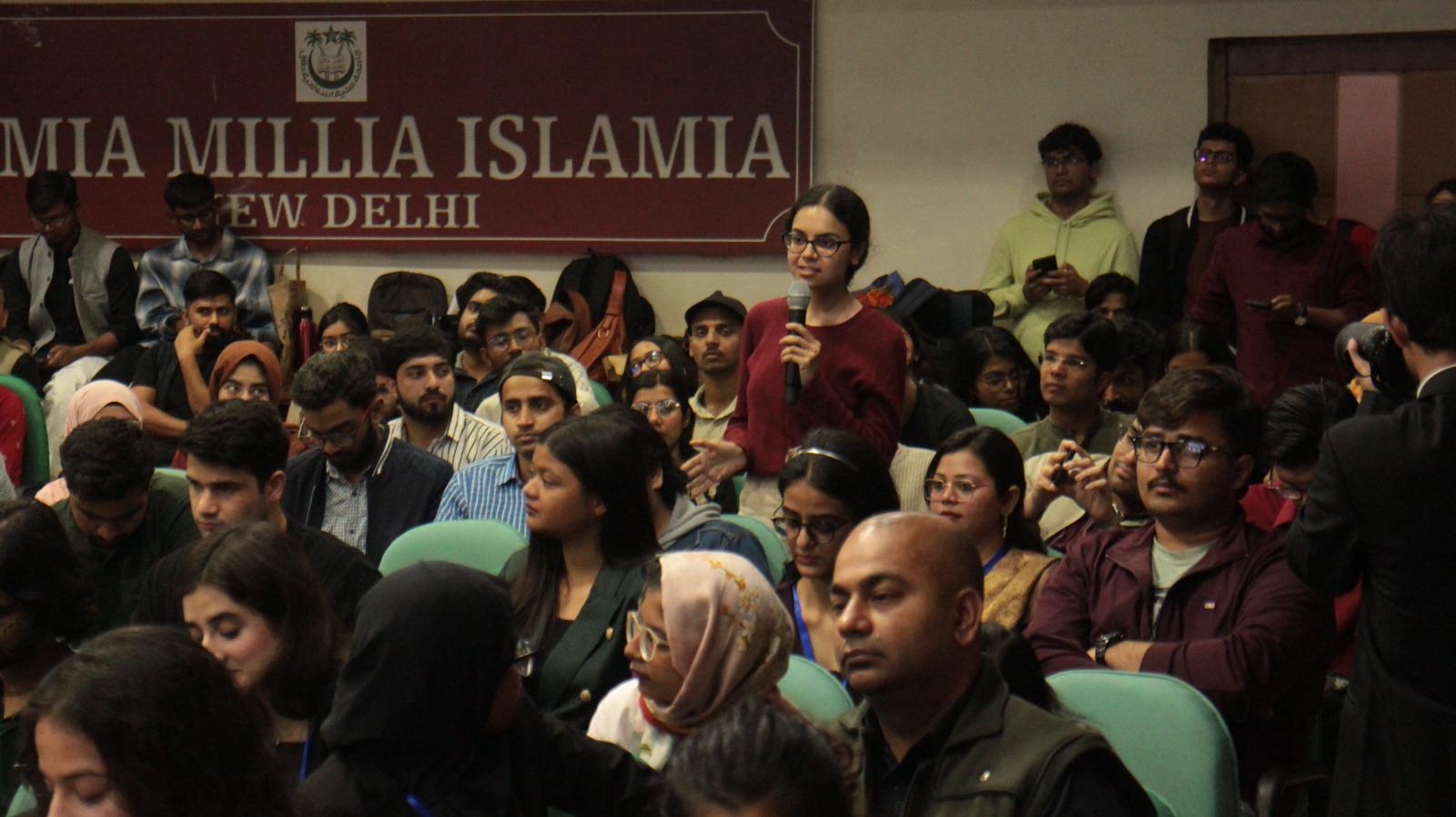
“Today, a large section of the Indian media is a caged peacock… and I would rather be a vulture than a caged peacock,” Sardesai said.
It was followed by another session with Outlook magazine editor Chinki Sinha on Navigating Newsroom Innovations. She discussed emerging tools, narrative experimentation, and the importance of preserving the soul of reportage amid rapid technological change. She also spoke briefly about some of the recent covers Outlook has produced and highlighted the significance of the female gaze in journalism.
The last session was a panel discussion on Reporting From the Hinterland, featuring alumni of the course and journalists Seraj Ali (Collective Newsroom/BBC), Zoya Hussain (independent journalist), and Hera Rizwan (BOOMLive). The speakers highlighted the nuances of reporting from sensitive regions, the disconnect between urban newsrooms and remote communities, and the critical need for sustained on-ground presence to counter erasure and misrepresentation. They also talked about the legal issues that journalists face and how important institutional backing is to deal with them. This session was moderated by Sadia Akhtar.
A curated set of documentary films produced by MACJ students as part of their coursework were screened to conclude the festival. The films offered narratives ranging from cultural microstories to broader social themes. The line up was Pahchaan, Hujoom, Gully Gully Six Six, Marghat and Dariya. The screenings were well-received and sparked conversations about visual ethics, representation, and the responsibility of emerging filmmakers.
AINAA 2026 concluded with a closing address by Mohammad Usmani, Course Coordinator for MA Convergent Journalism, who commended the student teams for conceptualising and executing the festival. He emphasised the continued importance of such forums in shaping thoughtful, ethically grounded journalists.
Across its two days, the festival brought together experience, experimentation, and critical inquiry—reaffirming AINAA’S place as a significant platform for emerging journalists navigating a rapidly evolving media world.