
On the fourth of May, 2026, India woke to a political reality it had not encountered since 1957, where no communist party governs any of its twenty-eight states. The Kerala election results, which handed the United Democratic Front one hundred and two seats while reducing the CPI(M) to twenty-six, closed a chapter that West Bengal’s simultaneous election closed from the other end, the BJP sweeping a state where the Left Front had once governed for thirty-four unbroken years. What these two results accomplish together, in a way that neither could accomplish alone, is the transformation of a regional reversal into a national historical verdict: the long retreat of parliamentary communism in India has reached its conclusion.
In 1957, when Elamkulam Manakkal Sankaran Namboodiripad led the Communist Party of India to an electoral majority in the newly constituted state of Kerala, he accomplished something that no Marxist party had done before or has done since in quite the same way, which is to say that he entered the chambers of parliamentary democracy not as a guest or an interloper but as a legitimate inheritor, winning governance through the very mechanisms that orthodox communist theory had always regarded with deep and principled suspicion. The world took notice, for it was one thing to seize power by revolution and quite another to be handed it by a ballot, and the experiment that began in Thiruvananthapuram that year carried within it a question that Indian politics has been slowly, fitfully, and sometimes painfully answering ever since; whether an ideology whose animating force is the critique of bourgeois institutions can survive, in any meaningful sense, by administering those institutions decade after decade.
On the fourth of May, 2026, the answer arrived, and it arrived not with the drama of a coup or a collapse but with the quiet, devastating finality of two election results delivered on the same day from opposite ends of the subcontinent. In Kerala, the Congress-led United Democratic Front won one hundred and two of one hundred and forty assembly seats, while the CPI(M)-led Left Democratic Front, which had held power for ten consecutive years and had in 2021 achieved the remarkable distinction of a back-to-back majority in a state whose voters had historically alternated between the two fronts with almost pristine regularity, was reduced to thirty-five seats in total, with the CPI(M) itself falling from sixty-two to twenty-six. In West Bengal, the state that had been the cradle of Indian communism, where the Communist Party of India found its earliest and most durable organisational base, where Jyoti Basu governed for twenty-three unbroken years, and where the Left Front had held power for thirty-four years before Mamata Banerjee ended that tenure in 2011, the BJP swept to a commanding majority while the CPI(M) polled figures so marginal as to constitute not an opposition but a remnant. What these two results accomplish together, in a way that neither could accomplish alone, is the transformation of a regional electoral reversal into a national historical verdict. It so happens that there is no more communist-governed state anywhere in India for the first time since 1957, and that fact carries a weight that goes considerably beyond electoral arithmetic.
It would be a mistake, and a historically careless one, to treat these results as though they arrived without preparation, for the retreat of parliamentary communism in India has been a staggered and legible process, each stage of which repeated the logic of the one before it. West Bengal fell to Mamata Banerjee’s Trinamool Congress in 2011, when the agrarian constituencies that the Left Front’s land reforms had created in the 1980s had long since transformed into an urban and peri-urban electorate whose aspirations the party could neither address nor acknowledge. Tripura followed in 2018, falling to the BJP in a result that signalled the penetration of Hindu nationalist politics into spaces the Left had once considered structurally secure. Kerala was the last remaining tower, the final proof that democratic communism in India could sustain itself against the pressures of globalisation, caste realignment, and aggressive cultural nationalism, and when that ground gave way simultaneously with Bengal’s own decisive verdict, the pattern that had been forming across fifteen years snapped into unmistakable clarity.
The question that any serious account of this collapse must confront is whether the defeat belongs primarily to the CPI(M) as an organisation or to the ideology it claimed to embody, for these are not the same thing, and the confusion of the two produces very different conclusions. Those who argue that the Kerala loss is essentially an organisational point to the evidence of internal party dysfunction, which is considerable. In the 2026 elections, a significant number of rebel CPI(M) candidates, running against their own party’s official nominees, won their constituencies, which is not the behaviour of a movement in ideological crisis so much as the behaviour of a party whose internal discipline has decomposed into competing interests dressed in the language of principle. Party cadres, speaking privately in the aftermath of the results, described a leadership structure that had grown, over the Pinarayi Vijayan years, less like a mass political movement animated by class consciousness and more like a corporate administrative apparatus animated by the imperatives of staying in power, and what is striking about this description is not that it was offered by the opposition but that it was offered by the faithful. The parallel with Bengal is instructive here, for what ended the Left Front’s thirty-four years in that state was not, at its core, an ideological rejection either, but rather the accumulated weight of cadre violence, land acquisition controversies at Singur and Nandigram, and a party machinery that had confused its own perpetuation with the interests it was constituted to serve.
And yet to rest the entire explanation on organisational decay is to avoid the harder question, which is why the Indian Left proved so consistently incapable of renewing itself when the conditions that produced its historical constituencies underwent transformation. The mill workers of Kanpur and the plantation labourers of the Nilgiris, whom the Left parties had organised in an earlier India, did not map onto the gig economy workers, the IT professionals, and the remittance-dependent families of contemporary Kerala, and the CPI(M)’s attempts to address these new constituencies were, in the judgement of those constituencies, too hesitant, too ideologically encumbered, and too late. What gives the Kerala defeat its particular sharpness, as distinct from the Bengal and Tripura losses which preceded it, is that Kerala had offered the most sustained recent evidence that the Left could govern progressively and effectively within a parliamentary framework, and that evidence is complicated rather than cancelled by the 2026 result. The Pinarayi government’s record on public health, its management of successive Nipah outbreaks, its expansion of the Kudumbashree network, its investment in digital infrastructure across rural districts constituted a real and documented achievement, which is precisely what makes the scale of the electoral rejection so difficult to account for by reference to governance failure alone. Voters in Kerala appear to have distinguished between what the government did and what the party had become, between the public goods that the Left delivered and the political culture, marked by opacity, centralisation, and an intolerance of internal dissent, that increasingly surrounded the delivery of those goods.
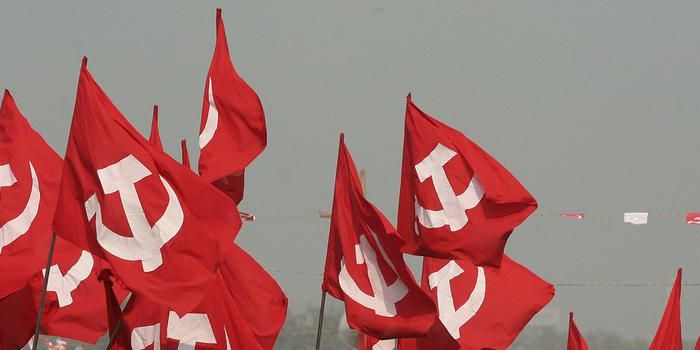
The CPI(M) Polit Bureau, in its first statement after the results, was careful to distribute the responsibility collectively, noting that the moral weight of the defeat did not rest with Pinarayi Vijayan alone but with the party leadership as a whole, and this formulation, whatever its tactical merits in preventing a destructive internal reckoning, at least signals an institutional awareness that the problems are structural and not merely personal. It is worth remembering, as one surveys this landscape of extinguished red flags from Thiruvananthapuram to Kolkata, that the questions which Indian communism raised about land, labour, caste, and the distribution of capital are not questions that have been answered by the Left’s electoral decline, for they have been answered by no one else either. And so one is left, finally, with a question that no election result can answer and that the CPI(M)’s internal reviews will not resolve, which is whether a political ideal that built hospitals in Kerala, redistributed land in Bengal, and taught a significant portion of the Indian poor that their condition was not natural but political, can find, in a country whose inequalities are deepening even as its aggregate prosperity grows, the organisational form and the ideological language adequate to its own revival, and whether this catastrophic failure, marks not the conclusion of democratic communism in India but merely the end of one of its chapters, so that the flag that was furled that day may yet, in some future that the present cannot see but that the persistence of the questions it raised makes not unimaginable, be raised again?
Joel K. Albert is pursuing his Masters in English from Jamia Millia Islamia.
Edited by: Mohammad Arham
Disclaimer: The opinions expressed in this Publication are those of the author. They do not purport to reflect the opinions or views of The Jamia Review or its members