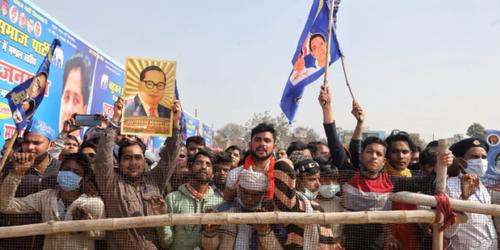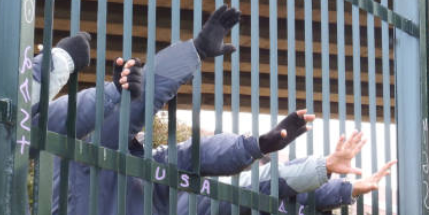

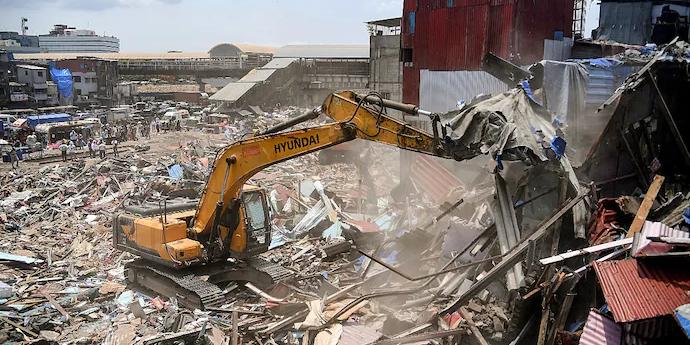
Across India, demolition drives carried out in the name of development have increasingly become symbols of a deeper crisis — one where infrastructure expansion often comes at the cost of human displacement. From Mumbai to Assam, entire communities built over decades are being reduced to rubble under claims of legality and urban progress, oftentimes without adequate rehabilitation or long-term planning for those affected. Although the entire operation is mandated under a strict legal order, the Bombay High Court ruled on April 29 that the unauthorised structures must be removed, a decision later upheld by the Supreme Court. The demolition of Garib Nagar in Mumbai is not merely an isolated administrative action; it reflects a growing national precedent that raises urgent questions about citizenship, dignity, and the true meaning of development in a democratic society.
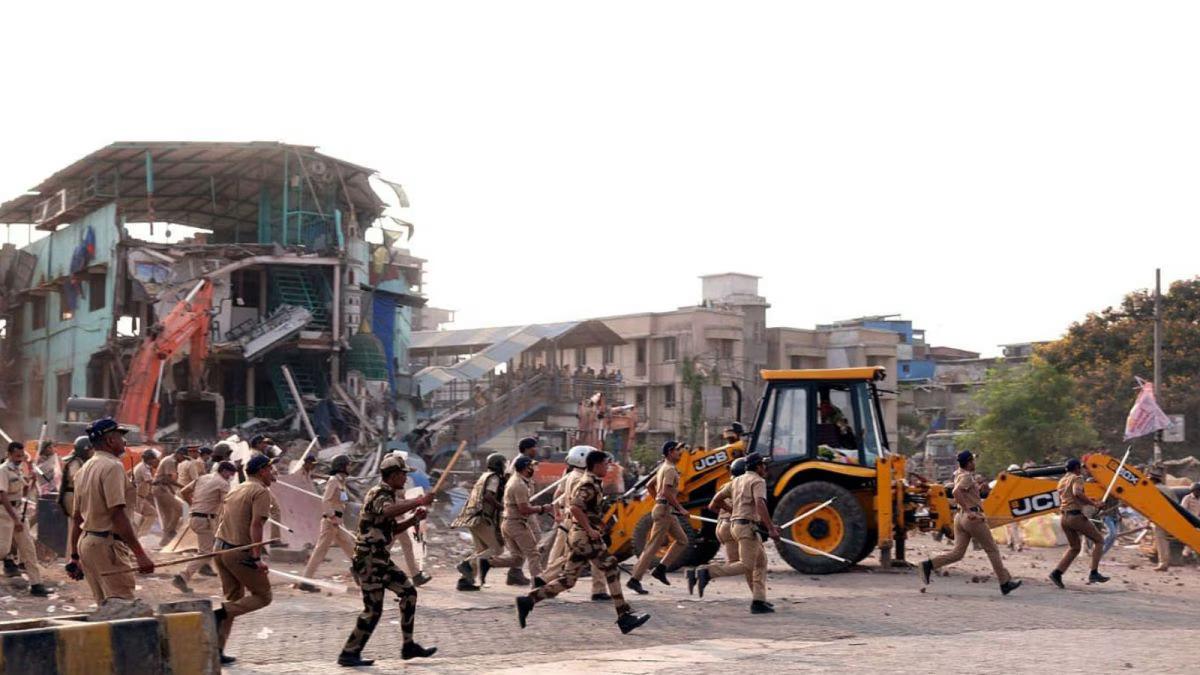
It began as an ordinary day in Bandra East, when bulldozers moved through the Garib Nagar settlement in Mumbai’s Bandra East before dawn on Tuesday, reducing to rubble the homes that hundreds of families had occupied for decades, as India's Western Railway executed a court-sanctioned eviction drive to free up land for a long-delayed suburban rail expansion. By nightfall, roughly 400 structures had been razed. Police in riot gear lined the perimeter. A few residents threw stones. Mostly just watched.“We cooked in this kitchen this morning,” said one woman, weeping while standing beside a heap of broken concrete and plastic sheeting that had once been her home just a few hours earlier. Although she declined to disclose her name, she further added that “by afternoon, it was all gone.”
This particular drive was initiated by the Western Railways, aimed at a full-scale four-day operation starting from May 19th, targeting the Garib Nagar slum that runs parallel to the tracks just east of Bandra suburban station. Officials from the Railway Protection Force, Government Railway Police, and Mumbai Police were deployed in large numbers to manage the clearance. Officials from the railways said the operation was being carried out under strict compliance with directions from the Bombay High Court, which ruled on April 29 that unauthorised structures on the land must be removed. The Supreme Court subsequently upheld that order.
Furthermore, in a statement by the Western Railways, it was stated that the “Permanent encroachments cannot be permitted on railway land and this particular strip of land is needed for construction of the Santacruz–Mumbai Central corridor extension”. This project aims to ease one of the world's most congested suburban networks, which carries over seven million passengers each day. Debris clearing was still ongoing as of Friday, May 22, with police simultaneously rounding up individuals accused of participating in protests earlier that week.
Garib Nagar is not a new settlement. According to the residents and local historians, this colony took its roots in the 1970s and 1980s, when waves of migrants from across India arrived in Mumbai looking for work near the railway. Over the decades, the shanties became brick structures. Lanes were named. Mosques and temples were built. Children grew up and raised their own children there.
One of the locals stated, “My father came here in 1978. I was born here. My children were born here. Tell me, where do we go?”
The settlement sits on land registered to the railways; land the residents never owned on paper, but occupied through successive generations. Authorities estimate several thousand people lived in the affected zone, though no official census figure for Garib Nagar has been released in connection with the current drive.
According to residents, some households were given only days or even hours to vacate before demolition machinery arrived, though Western Railway has not publicly confirmed the notice period issued to individual families. The issue echoes complaints from previous demolition drives in Mumbai, where residents alleged inadequate notice before eviction. While Indian law does not require advance notice before demolishing illegal structures on government land, critics argue that families should be given a reasonable time to move belongings, secure documents, and arrange temporary shelter.
The court had directed that residents found eligible under a 2021 baseline survey be rehabilitated before demolition. Western Railway maintains that it has complied with the order and identified around 100 eligible residents. The rest, who arrived after the survey cut-off, those whose paperwork was incomplete, those who were simply not counted, have no formal claim to alternative housing under the current framework. Activists say that the 2021 survey is an inadequate baseline for a settlement of Garib Nagar's size and age. For many residents, rehabilitation is not just about receiving a new home—it is about retaining access to the livelihoods that make survival possible.
Western Railway officials frame the demolition in terms of rail safety and commuter capacity. Both arguments are legitimate. The tracks alongside Garib Nagar carry hundreds of trains daily. Encroachments close to live rail infrastructure are documented as a safety hazard. But the land also has another dimension. Bandra East sits at the edge of the Bandra-Kurla Complex- Mumbai's newest central business district, home to the headquarters of major banks, multinationals, and the country's financial regulators. Property prices in BKC rank among the highest in Asia. The Rail Land Development Authority, a government body that monetises surplus railway land, has initiated the auction of land parcels adjacent to the demolition site, according to reports. The planned bullet train station for the Mumbai–Ahmedabad high-speed rail project is located in proximity to the demolition site. Broader redevelopment projects are in the vicinity as well, including the Dharavi redevelopment carry a combined estimated investment of Rs 95,000 crore, according to government figures. None of this makes the demolition legally or ethically illegitimate. But it complicates the official narrative of the operation as purely a safety or infrastructure exercise.
The demolition sparked immediate political debate. BJP leader Kirit Somaiya described the structures as “Bangladeshi encroachments,” a characterization criticised by opposition parties and civil society groups, who accused him of making unsubstantiated claims. Western Railway has not used similar language, maintaining that the land is required for rail infrastructure, including additional lines expected to improve connectivity between Bandra station and Bandra Terminus. While no construction timeline has been announced, the impact on displaced residents is already visible. Many who do not qualify for rehabilitation face an uncertain future, with some moving in with relatives and others relying on community kitchens and informal relief efforts near the demolition site.
A follow-up hearing is expected, though no date has been confirmed yet. This leads us to the question of how the government is now going to set precedent, formulating a strategy to look at it beyond politics, keeping in mind that it must pivot towards a data-driven, evidence-based framework to resolve these issues, ensuring institutional continuity. For decades, demolition drives across India have been carried out in the name of development, infrastructure, and legality, often leaving thousands displaced and uncertain about their future. The question is no longer whether cities should develop, but whether development must come at the expense of those with the least power to bear its costs. When families who have lived in a place for generations can lose their homes within hours, legality alone may not be enough; development must also be measured by its capacity to preserve dignity and justice.
For many residents, these settlements are not temporary encroachments but entire ecosystems of survival. Livelihoods are tied to geography. Communities are tied to memory. To remove people without meaningful rehabilitation is not merely an administrative exercise; it is the dismantling of social continuity itself.
What is being established today is not just infrastructure precedent, but governance precedent, one where the State increasingly reserves the power to erase communities in the name of progress. If this model continues unquestioned, the larger concern is not simply about housing, but about citizenship itself: who truly belongs in the modern Indian city, and who can be removed from it. Ultimately, this debate extends beyond Garib Nagar, beyond Mumbai, and beyond any single demolition drive. It becomes a national question directed at the conscience of the Republic:
“How long will development continue to demand the displacement of the vulnerable before rehabilitation, dignity, and human continuity become central to the idea of progress itself?”
Arsalan Zahir Khan is a student pursuing Electrical Engineering at Jamia Millia Islamia
Edited by: Sritama
Disclaimer: The opinions expressed in this publication are those of the author. They do not purport to reflect the opinions or views of The Jamia Review or its members.