
On a list of never-ending lifestyles and rituals that are fading, there is one that revolves around a public space. Once, at every crease of the colonial cities, the Irani Cafes have been repositories of an eclectic culture and mundanity. Brought into South Asia by Parsi refugees, the cafes stitched their way into the daily life of the people, into the broad theatre of dialogues, ideas, rest, and collectiveness. Yet as years pass, the significance of their tea has dipped, and the doors that swung open early are becoming closed shutters, much owing to the rapidity of life and the loss of culinary and taste. As the cities get populated by flimsy eateries and trend hoppers, TJR Writer Syed Kabeer Hassan writes a personal essay on a memory, crawling upon the architecture and history of Iranian Cafes.
In Pune, when I was nineteen, on the foothill of some kind of anguish that I predicted would stay as long as the chaos remained on its streets, I stumbled into a time capsule that knowingly or unknowingly carved in its moments of contact, a certain balm that I could not very easily explain without having to pull you to the place.
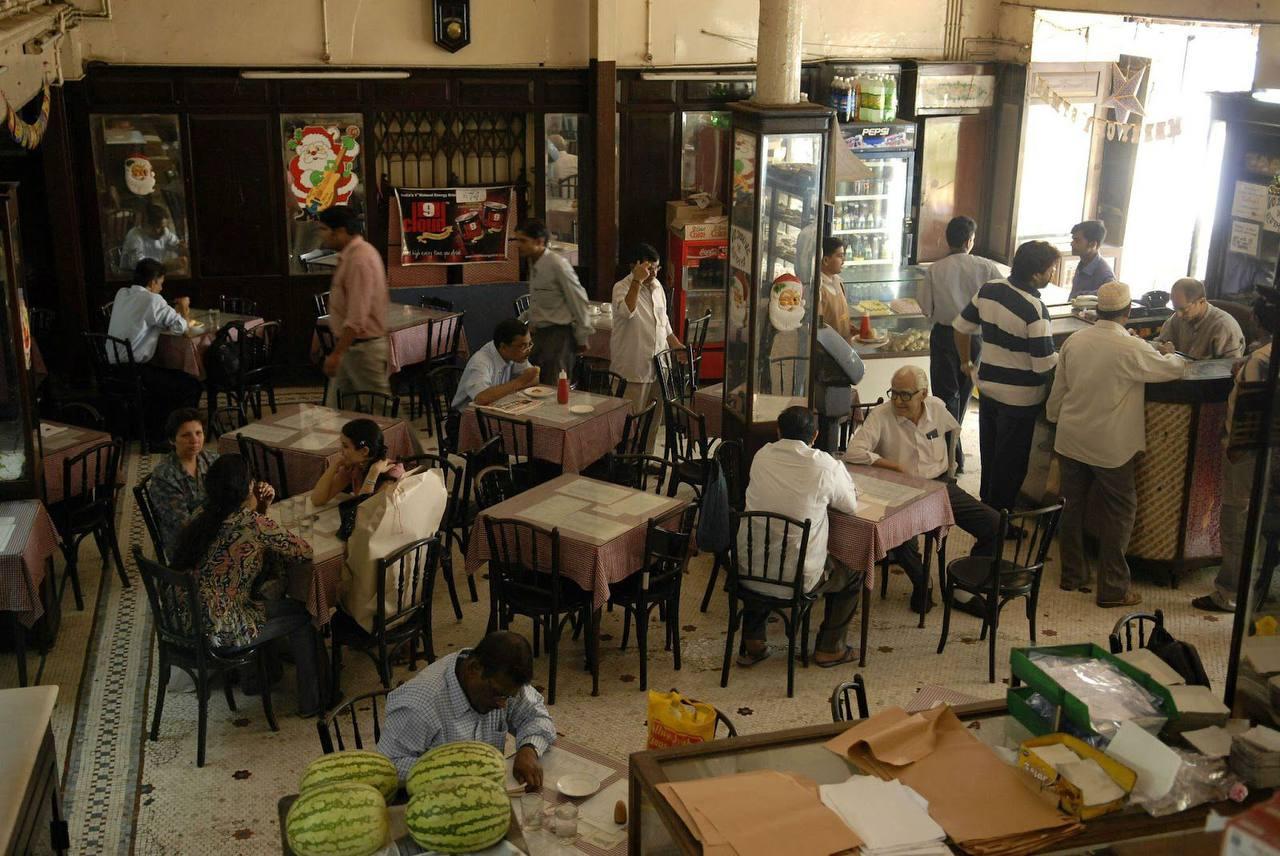
Every afternoon, my cousin and I would drive over to Ali Bhai’s, watch the sun dunk its brittle rusks into the farthest horizon, catch up with a cigarette from the shop nearly adjacent to the café and talk until the ends of the world came to coil us back to where we were. A sight used to be enough: Antique bentwood chairs, magnificent glass jars storing dry cakes, biscuits, jams, spreads. There was a waiter who served us tea and toast every time we went. And there sat Ali bhai, at the wooden counter, always smiling if he caught your eye.
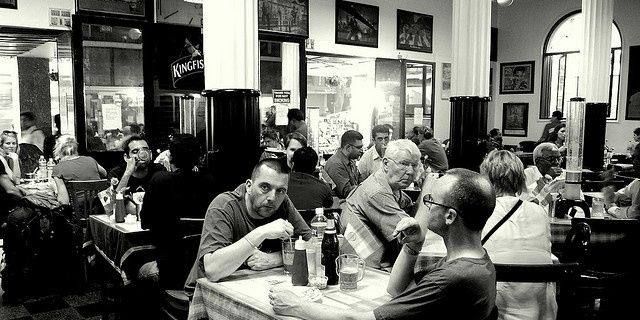
You could feel the time pausing in those moments, watching the teem of people unburdening some invisible weight on those wooden tables, watching them read newspapers, debating on the economic framework of their housing society, discussing in that liminal place about something which occurred only outside its folds. Here, the chequered floor, scent of fresh omelette squeezing between the breads, old Marxist men was a walk into a phantom memory, of a time lost, of a hope lost, of a senseless wandering that you can just be, besides the time.
This was an Irani Café. A living microcosm of what happens when the past intermingles with hospitality, and when the future makes you oblivious to whether it could sustain.
Though the Iranians, such as my family, came to India over a period of the last 300 years. One of the largest exoduses took place during the 1910s, when the Iranian economy was crumbling under the incompetent Qajar dynasty, and Great Powers like Russia and Britain had started thirsting for Iran due to its strategic value. A large mass of Zoroastrians and Shia Iranians came and settled in different parts of British India, alluding to the combined impact of the Great Famine of 1917 and the persecution of the minority community by the ruling dynasty. Many Iranians settled in Bombay, Pune, Karachi, Hyderabad, Gujarat, and other parts of Western India.
The origins of several Iranian café-owning families in Bombay and Karachi can be traced to places in eastern and central Iran like Yazd, Kerman, and Sistan, where there used to be comparatively more Zoroastrians living. In their migration towards the west coast of India, the Iranians were heavily aided by the Parsi Community of Bombay. For many Irani Zoroastrians, the Parsi housing colonies in Bombay's Fort district were their first home in India.
The Irani Café is in a huge number in Mumbai, Pune, and Karachi, which are popular for its Irani Chai (tea). Irani Cafes hold a reverent existence; they aren’t merely a café, they are the town halls of daily life.
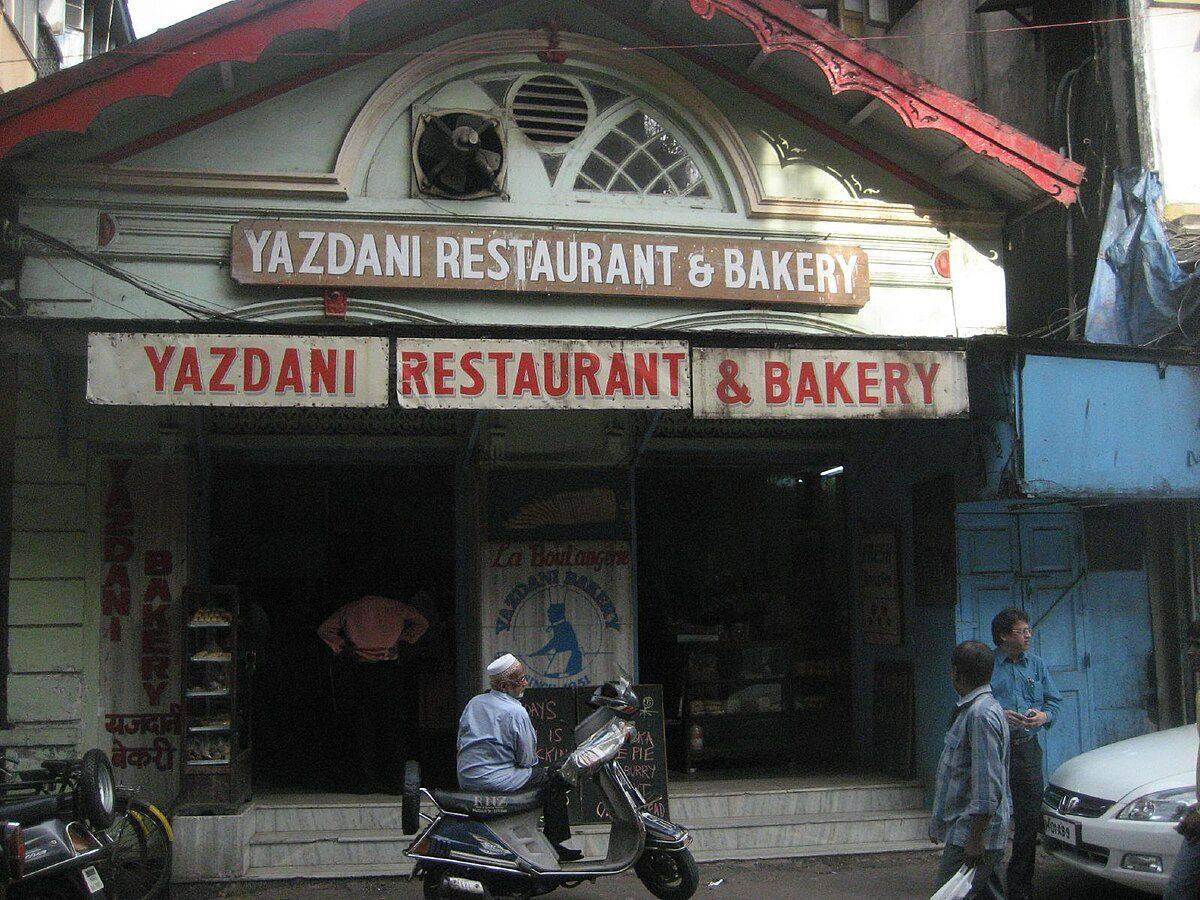
Legend goes on to say that in the early days of the Iranian immigration, the second-generation immigrants provided domestic help, working in Parsi homes and later gathered in the evenings to reminisce about their homeland. At one such gathering, one of the immigrant men served tea and dry cakes in a tray to the people gathered there and charged a small amount for them. This sowed the idea for Irani cafes.
And soon, as they settled in the area, they honed in on a niche in the food market to serve baked goods to the British. Their cafes began by offering English-style teas, wedding cakes, and pastries. They embraced the elegance of English interiors, with rich, dark wood furniture and lustrous marble countertops. Yet, after the British departed India, the cafes gracefully adapted, reorienting their offerings to nourish a primarily Indian patronage.
According to a report by Naomi Lobo of the Indian Express, in the 1950s, there were 350 Irani cafés in Mumbai alone, but only 25 remained in the city in 2005. Currently, it is estimated to be as low as 15. A similar trend is relevant in cities like Hyderabad and Karachi.
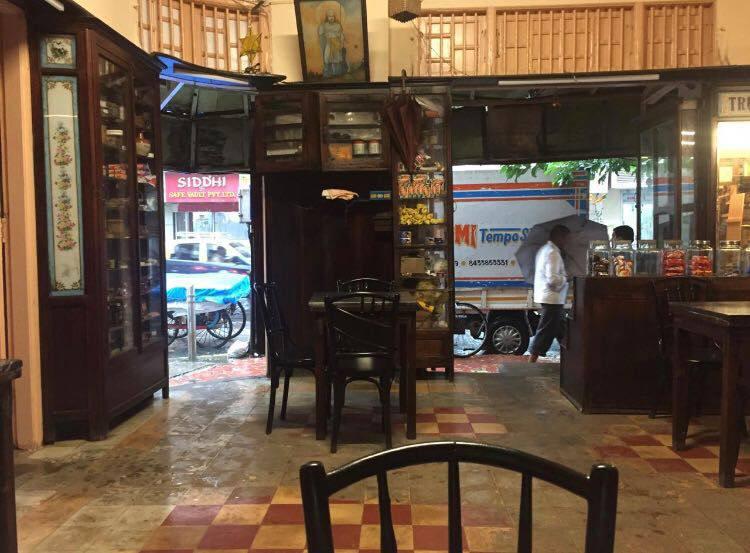
These unpretentious cafés had swift service, affordable prices, and introduced Indians to mutton puffs, akuri (spiced scrambled eggs), berry pulao, delectable baked goods like nan khatai (crisp, flaky biscuits), and Salli Boti, a rich lamb curry simmered with tomatoes and onions.
Patrons often dunk a buttered piece of bun into their chai, savouring the morsel as a glossy layer of butter floats atop the tea, reminiscent of an oil slick on the sea. Some refined Zoroastrians frown upon this habit, deeming it coarse, fit for tanga-wallas (horse-cart drivers). Yet, for my cousin and me, despite rebukes, this is almost a tradition towards finding some peace.
An alternative to bread is the range of different biscuits, each holding a different persona and shelf life. One of my favorites share the same delicacy as Osmania biscuits of Hyderabad. The art lies in timing: dip the biscuit briefly and eat it at once to relish the warm, intact bite, avoiding a soggy mess. With those biscuits, precision is key. Dip just a quarter-inch beyond the edge to prevent disintegration. Done right, the moistened portion melts cleanly in the mouth, no biting required.
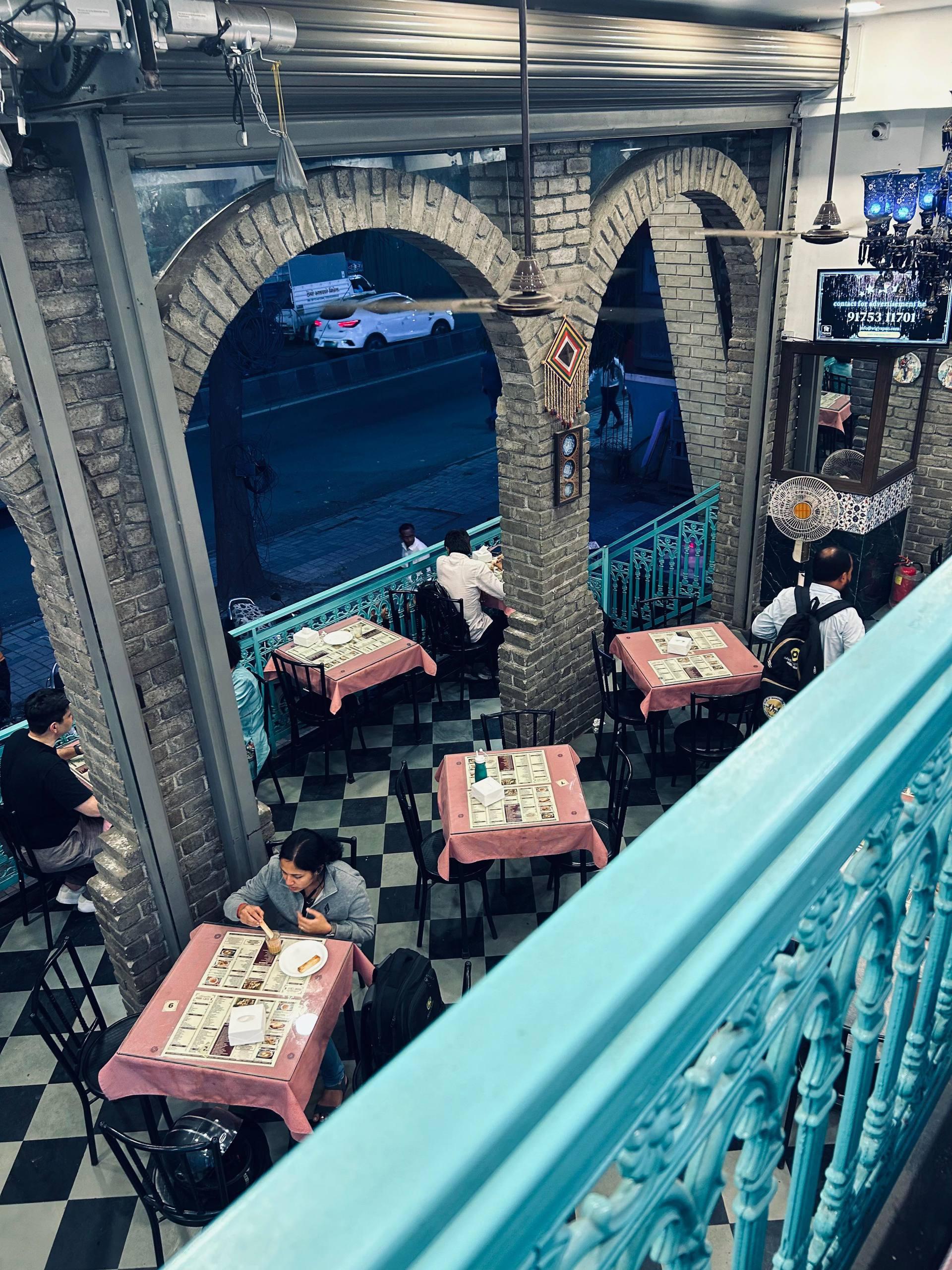
No two Irani cafés are quite alike, each bearing the unique imprint of its owner through distinctive decor quirks. Special menus, tailored to local tastes, often swayed patrons to pick their favourite haunt. Many cafés featured screened-off family rooms, offering women and children a private space to dine in comfort.
Ali’s café, which we are natives of, is a small place at the corner responding in its own ways to the mundanity of dailiness. That café had a smoking allowed policy in the outer area because the owner himself is a heavy smoker, and because, as he points out, “When it rains (which it does quite often), watching the city move from this angle often brings you a peculiar sense of heaviness—would I sin to disallow smoking then?”
Such things are not quite common in other cafes. Many Irani cafes offer sweet and salted biscuits like rawa (semolina), til rawa coconut, nan-khatai (sweet, crisp, flaky Irani biscuits), and madeira cake (tutti-frutti biscuits), which Ali doesn’t keep at his place. Yet I doubt others could boil the tea as well as he did.
Similarly, Rustom Café in South Bombay dates back to 1920, when Rustom Aspandiar Bahmani left Yazd with his companions, all on muleback, towards Zahidan, from where they took the sluggish train to Quetta, then to Karachi, and finally to Bombay, where they arrived by sailboat.
In Bastani Café, where Nissim Ezekiel wrote one of his famous poems based on the instruction boards found in the café:
IRANI RESTAURANT INSTRUCTIONS*
Please
Do not spit
Do not sit more
Pay promptly,
time is valuable
Do not write a letter
without order refreshment
Do not comb,
The hair is spoiling the floor
Do not make mischief in the cabin
Our waiter is reporting
Come again
All are welcome, whatever cast
If not satisfied, tell us
otherwise tell others
GOD IS GREAT
------ Nissim Ezekiel, 1972
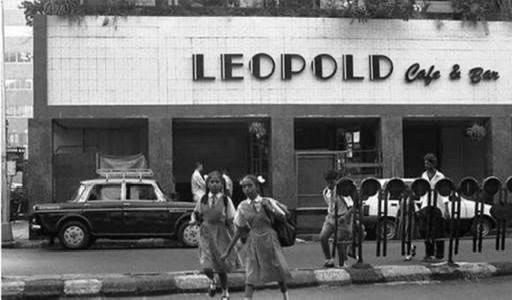
In 2008, an Irani Café: The Leopold café, located close to the Taj Mahal Hotel, was also the first target of the terrorist attack in Mumbai. The Leopold gained worldwide fame first in Gregory David Roberts' 2003 novel Shantaram, and then on November 26, 2008, as the first target of the 26/11 terrorist attack on well-known Mumbai landmarks. "Leopold's was a place for people to see, to be seen and to see themselves in the act of being seen," wrote Roberts in his novel.
Like Mumbai, Karachi is a mosaic of migrants, including a shrinking Parsi community that settled there instead of moving to Bombay. These Zoroastrian immigrants, fleeing religious persecution in Iran during the early 1900s, founded Karachi’s early Irani cafés.
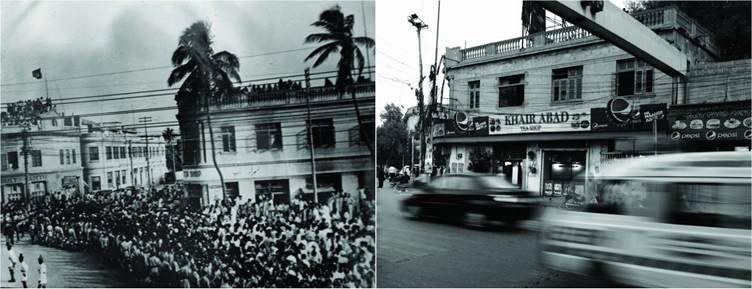
While alcohol was neither sold nor permitted in the cafés, some patrons, drunk on drinks elsewhere, stopped by for a meal. This lively subculture faded in the 1970s under the policies of Bhutto and later Zia ul-Haq, who suppressed “un-Islamic” practices. In contrast, Mumbai’s Irani cafés adapted by securing liquor licenses to boost business. Karachi’s cafés also served as informal betting hubs for horse racing, with bookies taking wagers as patrons later headed to the Old Race Course grounds to learn the results. Additionally, the cafés’ relaxed ambiance made them discreet spots for marijuana transactions.
The fading of Irani cafés in Karachi, much like in Mumbai, erodes a way of life tied to the city’s Zoroastrian heritage and its vibrant, eclectic past.
The Iranian cafes are on the brink of disappearing within 10-12 years. At least it seems like that. Nobody is interested in coffees that will spark conversations; everyone wants a coffee for their Instagram feed. Now, no more chai and bun maska are queued to be served. The concept of chai and bun maska seems to eventually go out. And it’s all happening at such a fast pace, we are all witnessing another Corinth of our society rust into a dim bronze.
Ali Bhai’s café remains a timeless memoryscape for me. There are still days when I yearn to be sitting in that cynosure of warmth, with a cup of tea, a cousin, and probably a cigarette. I wonder if the rain still brings a ‘peculiar sense of heaviness’ in the café. I wonder if that city is still running at the same angle.
What dies with a café is a recipe of sitting, a recipe of listening, of being seen. We are losing the rooms where time used to wait for us.
Syed Kabir Hassan is a student pursuing Law at the University of Jamia Millia Islamia.
Edited by: Omama Abu Talha
Disclaimer: The opinions expressed in this publication are those of the author. They do not purport to reflect the opinions or views of The Jamia Review or its members.