
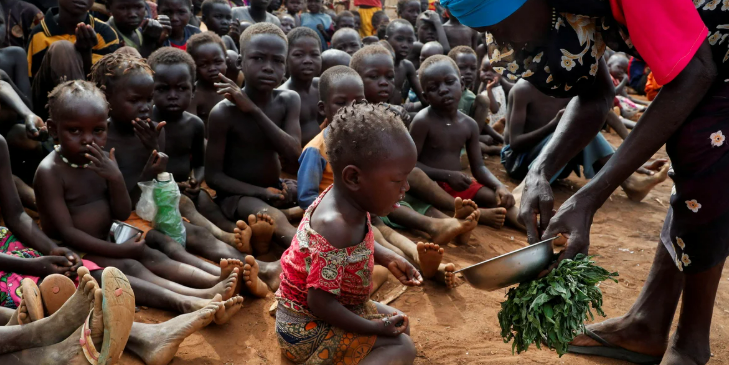
The Darfur crisis in western Sudan has escalated into an acute humanitarian catastrophe. The conflict between SAF and RSF has devastated cities like El Fasher, resulting in widespread killings, displacement, and starvation of the civilian population. More than nine million people have been displaced, and there are reports of targeted ethnic violence, looting, and other atrocities that may constitute war crimes. Access to aid remains limited, and famine-like conditions accentuate human suffering. With international outcry, peace efforts so far have faltered, and civilians have gotten themselves trapped in the crossfire. The tragedy that is happening in Darfur is proof of the world's failure to prevent another genocide two decades after the first.
On the arid, windswept plains of western Sudan, El Fasher now sits at the center of a disaster that continues to spiral. What began as a localized conflict between the Sudanese Armed Forces (SAF) and the Rapid Support Forces (RSF) has transformed into a catastrophe defined by unrelenting violence, mass displacement, severe hunger, and growing evidence of war crimes and crimes against humanity. This war has dragged on for more than two years, but recently, the situation has grown even more dire—especially for civilians. When the RSF captured El Fasher on October 26, 2025, the city descended into chaos. Reports of mass killings and intentional starvation tactics followed almost at once. Aid workers uncovered mass graves. Trapped within the city, people are forced to make impossible choices just to stay alive. Outside, humanitarian groups try to respond, but violence, political obstacles, and collapsing infrastructure block their efforts. The needs multiply every day, and the world struggles to respond.
The conflict in Darfur has reached a critical point. Widespread atrocities are being reported, particularly in El Fasher. The true toll is certainly higher than what’s been confirmed so far. With communications cut and investigators kept away, much of what’s happening remains shrouded in darkness. The Saudi Maternity Hospital in El Fasher has become a grim emblem of the violence. It has suffered four attacks in one month. The deadliest, on October 28, killed over 460 patients and relatives. On that same day, six health workers were kidnapped—an unmistakable assault on the principle of medical neutrality. These aren’t isolated attacks. The World Health Organization reports that 46 health workers have died and another 48 have been wounded in El Fasher alone. There is a clear pattern: hospitals and their staff are being targeted. The RSF’s brutality is evident in numerous videos. Human Rights Watch has viewed dozens of executions of people trying to flee the city. The situation is even more grim. A Yale researcher has confirmed that the RSF is excavating mass graves in El Fasher—an effort to conceal the full scale of the killings.
Before El Fasher was overtaken, its residents endured a siege. Supplies of food, water, and humanitarian aid were blocked. This was not by chance; it was deliberate. The outcome has been widespread starvation. Among children under five, the figures are alarming: in October, when aid workers screened 165 young children, three-quarters were found to be acutely malnourished. Hunger pervades everywhere. The violence has claimed thousands of lives. In a recent assault, at least 53 people—including 14 children and 15 women—were killed when a shelter for displaced families was bombarded, reportedly by shelling or a drone, according to the Sudan Doctors’ Network. In September, a drone attack on a mosque in El Fasher killed at least 75 more. The UN’s human rights office recorded 3,384 civilian deaths across Sudan from January to June 2025; most of these occurred in Darfur.
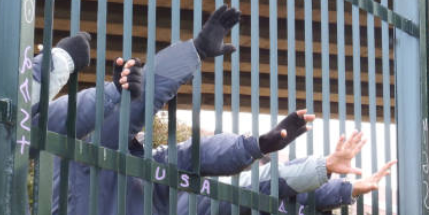
More than 260,000 civilians are currently trapped in El Fasher, cut off from food, clean water, and basic medical care. Violence and siege have surrounded the city, and the suffering is impossible to overlook. In fact, the situation in Darfur has reached a breaking point. The conflict keeps intensifying, and the humanitarian impact is devastating. If El Fasher falls—and it’s the last major stronghold of the Sudanese Armed Forces in Darfur—the consequences will be enormous. People fear a surge in ethnic violence, widespread famine, and even more families forced to flee their homes. Losing the city would leave the rest of Darfur dangerously vulnerable.
Healthcare in Darfur has collapsed due to direct attacks on facilities. People are dying from treatable diseases, hunger, and wounds as medical care is unavailable. Widespread hunger, exacerbated by blocked supply routes, has caused soaring malnutrition, particularly among children, jeopardizing an entire generation. The crisis is escalating, forcing tens of thousands to flee to overcrowded, makeshift camps like Tawila, and threatening to destabilize neighboring countries.
Numbers alone can’t express the pain, upheaval, or loss experienced by people in Darfur. Yet these estimates serve an essential purpose. They put the crisis's magnitude front and center. When reports escalate from hundreds of deaths to thousands, then tens of thousands, the reality is impossible to ignore. It’s not merely a far-off tragedy—it’s a major humanitarian disaster. These increasing figures serve as an alarm, calling for immediate action from the world and making it clear this isn’t a contained incident but a widespread catastrophe. They also expose the depth of humanitarian failure. The numbers show a pattern: people denied food and medicine, aid blocked at gunpoint, hospitals and water systems deliberately attacked. These outcomes aren’t accidental—deliberate choices lead to starvation, disease, and more death. The data make it obvious: when basic humanitarian principles are ignored, tragedy results. These figures are also crucial for accountability and justice. Accounts of mass graves, attacks on medical facilities, and summary executions—these aren’t merely statistics. They indicate war crimes and crimes against humanity. Careful documentation, even if early estimates are rough, creates the foundation for later investigations and prosecutions. This is how justice for victims begins. Demonstrating that such crimes will be prosecuted matters—not just for today, but to deter future atrocities and uphold international law.
Finally, these numbers force the world to face difficult questions. Understanding the true scale is hard when violence is hidden by blockades, blackouts, and chaos. But even rough data compels the global community to confront the ethical and practical dilemmas of responding—how to act, how to confirm information, how to protect people amid uncertainty. The numbers don’t have all the answers, but they do make one thing clear: the duty to protect those at risk doesn’t vanish just because the facts are hard to obtain or the situation is complex. The crisis unfolding in El Fasher and across Darfur is not just another remote catastrophe. It demands our attention and challenges us to consider what it truly means to uphold humanitarian principles and global responsibility.
The immediate exigency is one of access: populations are succumbing daily to starvation, illness, and conflict while the global community demonstrates an inadequate response. Administrative impediments, blockades, and assaults on humanitarian personnel constitute intolerable violations of international humanitarian law; such inaction renders the world culpable. Moreover, substantiated evidence of atrocities—specifically war crimes, crimes against humanity, and genocide—must precipitate accountability, extending beyond mere documentation. The international community is obligated to transcend mere pronouncements, instead deploying protective forces, implementing targeted sanctions, and pursuing international prosecution of perpetrators. Any response of a lesser measure is decidedly inadequate.
Meanwhile, hundreds of thousands have been uprooted from their homes. Their futures are uncertain. Will they ever return, or are they doomed to remain in camps, surviving on less each day? If a safe, lasting return isn’t possible, how do they rebuild their lives or even hope for a future? This is about more than shelter or food—it’s about comprehensive recovery: peacebuilding, disarmament, demobilization, reintegration, and genuine investment in reconstruction. Without that, “recovery” is just an empty promise.
There’s another aspect to consider. What about us—individuals, communities, people who feel powerless in the face of such suffering? We’re not powerless. We can raise awareness, use our voices online, educate others, and bring these stories into public discourse. We can support trustworthy organizations on the ground—donate, volunteer, advocate. We can also put real pressure on politicians, international agencies, and anyone with the authority to make a difference. Holding them accountable is crucial. It could mean the difference between more of the same and a real move toward justice. Even when hope feels out of reach, bearing witness matters. Refusing to look away, insisting these stories are heard, is an act of solidarity. The lives lost, families torn apart, children starving—none of it should be erased by silence or indifference. Their stories must be told, acknowledged, and remembered.
So the question remains: what role will you take? Will you help ensure these voices are heard across the globe, refusing to let this suffering slip into obscurity? If we each do something—even something small—we resist despair. We remind the world that the people of Darfur are not invisible, that hope and justice are not only dreams, and that the human spirit can endure, even in the darkest moments.
Arsalan Khan is a student pursuing Electrical Engineering at Jamia Millia Islamia
Edited by: Omama Abu Talha
Disclaimer: The opinions expressed in this publication are those of the author. They do not purport to reflect the opinions or views of The Jamia Review or its members.