
This article aims to explore the manipulation, corruption and infiltration of humans by the organised system that runs the world. From the very beginning, what we experience, feel, and dream about is monitored and well established by the system. They habituate us to their liking, to benefit in their vices, and we willingly or unwillingly submit before them. The normalised mechanization of human existence and generalized norms result in the lack of individual choices and more in collective submission. The questions of resistance are raised often, but in actuality the act itself seems impossible, and so, only the thought remains. This article is akin to this experience, raising questions, resisting with words, but in practice, despite having answers, the impossibility of it all seems to persist still.
How does one resist the system while being enclosed within it? The organised system is too intricate in its organisation, its formation and execution. Each person serves a purpose in this organisation, and if that person ceases to be useful, they come in abundance, ready to be used to fulfillment– like Ophiocordyceps unilateralis- the parasite infects an ant’s brain, commands the ant to climb to a growth where the fungi can survive and then devours it whole when its purpose is fulfilled. The ordinary people are the ants in this web of the organised system; the system commands us and hollows us out till nothing remains. We resist, we speak, we boycott– but all are bootless cries. We are still inside the system, still in abundance, still serving someone else’s purpose, still quantified into mere numbers rather than human beings.
The organisation begins when, at three years of age, a little child is sent to be “educated” in schools. The children must know the perils of these organisations. They are intuitive, and so they resist (which is smothered in the near future); they cry before they go off to be educated and to be civilised. They rush back home crying still, but are sent back again the next morning and the ordeal is repeated throughout their lives, which they never anticipate, but accept at some point in their childhood. The schools are but mere habituation centres; the children are taught everything unimportant to their survival and everything important to the system that manufactures modern slaves. From very early on, the children learn about the sound of the bells; the school decides when they eat their lunches. They want us to be hungry at the same time, so they can get rid of our hunger altogether, reviving us when they want, starving us because they can. The parents give the rights to their children’s life, character, and what they ought to become, too readily to the organisation, oblivious to the kind of contrivance they will make out of these children. The rules get stricter as the children grow- they are taught obedience, hierarchy, respect, and submissiveness. Even in the smallest of schools, there is a power that the children must show obedience to- the children must stand up in respect when encountered with the power, lower their gazes to not be disrespectful, and always be aware that any sort of rebellion (which might as well be for a basic human right) will be seen as treachery and one can be thrown out of the system (which they never do, they hammer at your knees till they bend). The need to establish hierarchy is the essence of the organised system; without it, the world will collapse (or that’s what they want us to believe). The Principal, teachers, prefects, seniors, juniors and the staff– each play their part of being dominant to the lower levels and submissive to the upper levels, perfecting the act till each individual’s psyche is infiltrated by a collective experience of identity, self-worth, and imagination. They forcefully put you in tiny boxes called classrooms with no room for individual development; all your conundrums have the same roots, all your misery is shared with twenty to forty other people, and so you confide in one another, bond over the shared experience, and acquire a sense of pseudo-collectiveness instead of uniting as individuals to form friendships and relations.
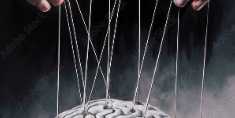
The children are grown-ups now; they have left school– psychologically trained and physically morphed. Now they enter the formulation stages of the system. The college is where it's all decided- who will be formulated into puppets, who will be cast out as rebellious, and who will be the combination of the two– resisting while still benefiting from the system. Presently, we all are in the combination. Most people seem to turn complacent more than they seem to revolt; they have been trained well. The college provides one with more freedom, or rather, a sense of freedom– bells do not ring, you can be late to classes, argue with teachers or be friends with them if you must, roam around the campus, wear what you want, explore yourself, be an individual. All seems very gratifying and freeing at its crux, but the core is still rotten, still controlled and managed by this organised system. More than half of the students graduating from school choose to go into STEM because that is socially acceptable. The remaining students who choose to study a subject from the humanities have rebelled their way into the arts, and now they must excel in order to be relevant. The act of being relevant is in itself a representation of how the organised system formulates the modern slave. First, it is important to the system to keep broilers naked and vulnerable, stripped of any sort of freedom or individuality, and then they proffer you profusely with a sense of freedom, and so you clutch onto the sense for as long as you have it. One becomes oblivious of the consequences when they are in a reverie; the perils are so far beyond the periphery to seek out, and it is so very dreamlike inside the periphery to ever want to get out. The grown-ups in college live in the reverie, tasting joy, joining societies, socialising with peers, living life at last. Some might still be wary of the consequences because they have known too many restrictions to be completely oblivious.
The last stage is execution or utilisation of the manufactured products. And so at twenty-five, the grown ups with all their senses and freedom “choose” to work in the cooperate while fantasizing about opening a small business of their own, earn enough money to acquire a sense of luxury– get a big enough house, eat farm bred meat everyday, buy expensive imported stuff, show off a little, seek the society's validation as to how “successful” they are while still being a chatterbox of how corrupt the government is, how fascist it has become, the advancing monopoly of a certain group of MNCs, and cruelty against minorities (but only when it comes to the sect they belong to). The final product of this organised system is a person who speaks, comprehends words, recognises the perils, critiques the system and is still a slave. They want a sound slave, an intelligent one. A foolish one will be useless; how will the big companies work? The organised system requires the knowledge of the modern slave to still be relevant and to proliferate. And the modern slave knows that they are a slave and are still willing to be one for as long as they are fed crumbs of freedom and life, because they have been habituated well.
The question still persists- how can one take themselves out of the system? How can they cease to be zombies? Do they become outlaws? Spend the rest of their lives in jail, appealing for a trial and getting none? We have enough of those, and the system keeps them in check. Do we reject all forms of organised system, religion, and government entirely? But how will that work out for us? Rejecting the organised system will result in being exiled in a desert with no water, no food, and no people because all that is by the grace of the organised system. Rejecting organised religion will result in being exiled from human connections and mocked for eternity. Rejecting the government is something we often do, but what has come out of it is still very obscure, very stagnant. What we ought to do or think or believe has become something very unnatural and out of the world at this point in time. What we do in actuality is that we wait, we hold our breaths, and with watchful eyes we search for a change to come by. When we are oppressed, we resist; we revolt at last, a revolution is finally attained, and we repeat the same cycle in a different font a century later. The time gone by- a history of today. What present will be the history of the future? And so the cycle repeats; we perform our parts, the curtains are never drawn.
Sufia Siddiqui is pursuing a Bachelor's degree in English from Jamia Millia Islamia.
Edited by: Mohammad Arham
Disclaimer: The opinions expressed in this Publication are those of the author. They do not purport to reflect the opinions or views of The Jamia Review or its members.