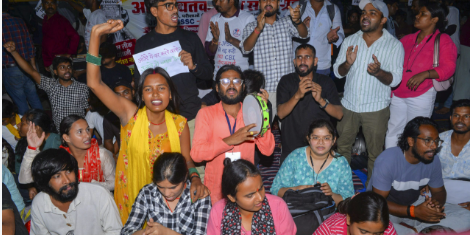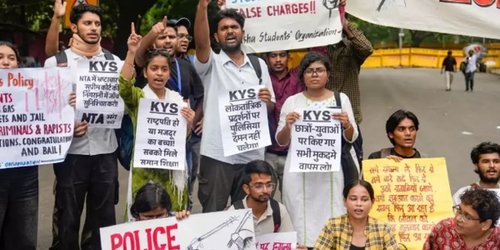


The Cockroach Janta Party protest concluded along a path familiar to political agitations across the country, trading an individual resignation for institutional change. When Dharmendra Pradhan stepped down from the Union Education Ministry after seven weeks of student mobilization at Jantar Mantar, the leadership framed the development as an unmitigated victory. The celebration surrounding this supposed triumph of student power over the central government deserves a far more critical assessment than the praise it received on social media. Beneath the satire, the viral broadcasts, and the insect costumes, the movement relied heavily on unacknowledged grassroots labour and packed up its tents before addressing the core defects of the examination system. The most glaring compromise lay in the management of the protest’s public image. While presented nationally as an inclusive youth agitation, its visible leadership and media strategy remained carefully detached from Muslim identity, even as Muslim volunteers sustained the physical occupation day after day. From the opening week, community kitchens organized largely by Muslim residents from adjoining neighbourhoods supplied the food and clean drinking water that kept the gathering viable. The state's response to this logistical support was both swift and harsh. A volunteer from Ghaziabad running one such community kitchen was detained by the police, and his family in western Uttar Pradesh was subjected to questioning. This severe repercussion went largely unnoticed in mainstream commentary, eclipsed by breathless coverage of Sonam Wangchuk’s hunger strike and daily press appearances by the core spokespersons.
This institutional detachment was not merely the defensive caution that minority organizations have learned through years of state scrutiny and selective policing. It served as a tactical convenience for an organizational leadership acutely aware of how quickly a visibly Muslim gathering is delegitimized and dispersed by state forces. Commentators observing the daily assembly frequently registered an implicit relief that the gathering did not present a minority character. A student platform that willingly consumes meals, water, and logistical support from Muslim citizens, while maintaining a sanitized public profile to preserve its political respectability, falls short of representing the broader youth. It represents only those demographics deemed politically safe to display, leaving vulnerable workers to shoulder legal risks beyond the camera frame. The organizational fractures inside the platform ran equally deep and cannot be excused as youthful spontaneity. Having originated as a satirical response to an insensitive judicial remark, the platform failed to build the institutional discipline required to sustain a complex seven-week sit-in. Inviting a senior activist like Sonam Wangchuk to undertake an indefinite fast carried an ethical obligation to maintain transparent medical oversight and an accountable leadership structure. Instead, Wangchuk’s eventual removal to a hospital turned into an uncoordinated public controversy. Organizers publicly claimed the evacuation occurred against his wishes, yet they could produce no coherent medical records or name the specific personnel responsible for monitoring his health on site.
This absence of structure undermined the political focus of the campaign. A minor ink attack on the founder rapidly hijacked the entire media cycle, pushing fundamental examination reforms out of public debate and demonstrating a fragile grip on political messaging. The movement operated as an unregistered entity without clear decision-making protocols, despite presiding over circumstances involving serious personal risk. When controversy flared over medical negligence, no specific organizer stepped forward to take responsibility. When volunteers were detained in outlying police stations, the leadership offered total silence. Spokespersons remained eager to occupy television prime time, while ground-level participants absorbed legal and physical consequences without acknowledgement. A decentralized, leaderless format is easily praised as participatory democracy when momentum is high, but here it serves as an alibi to evade responsibility whenever decisions put ordinary lives in jeopardy.
The ultimate outcome of the protest presents the most troubling compromise. While forcing a cabinet minister’s departure represents a clear political embarrassment for the ruling establishment, it remains an almost entirely symbolic concession when measured against the platform's initial promises. The core demand was kept deliberately narrow, focused on the removal of a single minister, which made an apparent breakthrough achievable within seven weeks. Yet the commercial and bureaucratic networks enabling paper leaks across national entrance tests remain intact. The opacity surrounding evaluation systems inside major testing bodies and central boards continues unresolved, and the structural loopholes that caused widespread disruptions across the 2026 examination cycle have been left unaddressed. By personalizing institutional decay into one administrative figure who has simply been rotated out of office, the movement bypassed the hard work of administrative reform. Even as the organizers conceded publicly that the broader fight for transparent examinations was far from over, they announced that no further marches or mobilizations would take place in the capital. Standing down at this juncture was an abandonment of the cause just as the real institutional struggle was set to begin. Trading a minister’s exit for an immediate retreat from the streets delivers the optics of public accountability without securing any structural remedies. It signals to the state that a symbolic resignation is sufficient to disperse public outrage, dismantle sustained momentum, and restore the status quo.
None of this critique diminishes the personal dedication of thousands of students who spent seven weeks under challenging conditions and constant police surveillance in the heart of Delhi. However, student publications and independent commentators committed to holding authority accountable cannot treat this campaign with uncritical reverence. The central question is not whether an executive resignation matters; it holds immediate political significance within its narrow boundaries. The actual inquiry is why a movement centred on public sacrifice chose to keep its most exposed contributors invisible, why it managed high-stakes medical emergencies without basic procedural rigour, and why it dissolved its own mobilization the moment deep structural demands were required. These constructional compromises must be documented frankly, because the path toward genuine institutional reform cannot be built on symbolic retreats disguised as victories.