The Privilege of ‘Castelessness’: Why Anti-Reservation Outrage and Caste Pride Cannot Coexist?

Abhigya Singh
Published

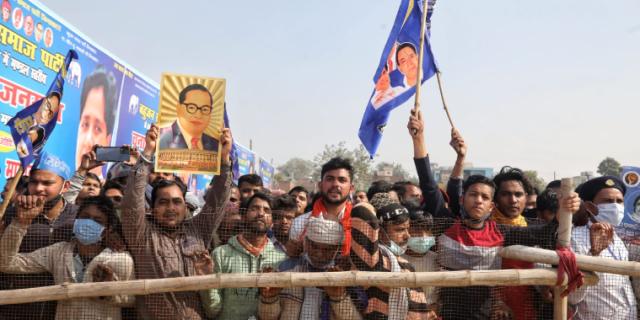
Whenever a person from a marginalized caste asserts their identity, they are immediately met with liberal outrage from dominant castes preaching the virtues of a ‘casteless’ society. Yet this sudden urge to erase identities lines up neatly with aggressive anti‑reservation rhetoric. The hypocrisy is plain to see: dominant castes push to dismantle affirmative action, while holding on to every advantage that caste has given them. This piece lays bare the privilege hidden in claims of ‘castelessness’ and shows why calling for an end to reservation makes no sense as long as casteist thinking continues to condition everyday life.
There is a predictable script that plays out in Indian public life whenever someone from a marginalized Dalit, Bahujan, or Adivasi community publicly claims their identity. The moment a subaltern voice asserts their caste as a marker of political visibility, survival, and historical resistance, self-proclaimed liberals and urban upper-caste elites swoop in to play the moral peacemakers. Suddenly, they become the loudest advocates for a utopian society where caste allegedly does not exist. “Why are you dividing us by bringing up caste?” they ask, insisting that we must view everyone as “human first.” It sounds progressive on paper, borrowing the vocabulary of egalitarianism to sound intellectually superior. This sudden, desperate urge to preach castelessness is hardly ever about actual equality. It works as a silencing tactic to shut down subaltern assertion. The hypocrisy of this stance is exposed every day in how dominant castes navigate the socio-political world. Upper-caste pride does not need to be violently or loudly asserted in the streets because it is already the default setting of our social architecture. It is woven into our institutions, normalized in the boardrooms, and sitting in the upper echelons of academia and media. For the oppressor, casting off a caste identity is easy because they have already reaped, and continue to reap, all its generational and material benefits. Their social capital, economic safety nets, and cultural confidence are built entirely on the very order they now claim to ignore whenever a marginalized person speaks up.
This selective blindness becomes even more glaring when we look at the everyday reality of caste pride and the ongoing anti-reservation discourse. We live in a country where flaunting dominant caste markers is normalized as ‘heritage’ or ‘culture.’ Look at the rear windshields of cars and motorcycles across Indian highways, boldly displaying dominant surnames and caste identities. Look at the matrimonial columns in any leading newspaper, which are shamelessly segregated by caste and sub-caste, demanding “status matching.” This blatant, everyday display of caste pride rarely triggers the “casteless” liberal outrage. When a Dalit groom simply dares to ride a horse to his own wedding, a routine cultural practice for the privileged, it is perceived as an existential threat to the social order, met with brutal, real-world violence. This same duality drives the anti-reservation movements. We are constantly subjected to debates and street protests demanding the rollback of affirmative action, with rhetoric aggressively wrapped in the language of ‘merit’ and ‘fairness.’ What these anti-reservation crusaders conveniently ignore is the fundamental, structural logic of why reservation exists in the first place. Reservation was never designed as a poverty alleviation scheme. It is a mechanism for representation in a society fundamentally rigged by birth. The dominant castes are perfectly content rallying against reservation, yet their outrage mysteriously vanishes when it comes to dismantling the caste order itself, because the latter guarantees their supremacy.
The demand to end reservation while the institution of caste is still breathing, mutating, and thriving is mathematically, logically, and morally absurd. You cannot demand that we scrap the medicine while you actively feed and nurture the disease. Affirmative action can only become obsolete when the caste order and the deep-seated, insidious casteist mentality that governs everyday Indian life are completely eradicated from our collective psyche. Nobody in the anti-reservation camp is protesting to abolish the caste order. They are only protesting the perceived loss of their historical monopoly over resources, education, and institutional spaces. Caste as an institution is not going anywhere anytime soon. It has simply shape-shifted to fit modern urban spaces, turning explicit untouchability into new forms of exclusion. For the oppressed, caste is not a badge of privilege they can just take off at will. It is a brutal reality imposed upon them by exclusion and discrimination. When they claim their caste, they are demanding space and acknowledging that they have survived an order deliberately designed to crush them. Asking marginalized groups to drop their caste pride just to make upper-caste liberals feel at ease is demanding that they erase their own political and historical struggle. If dominant castes genuinely want a society without reservation and without caste assertion, they must direct their outrage at the root cause. Destroy the casteist mentality, dismantle monopolies over resources and positions, and end social hierarchies. Until then, tone-policing subaltern voices under the guise of progressive liberalism is nothing but casteism wearing a modern mask.
Abhigya Singh is pursuing her bachelor’s degree in Multidisciplinary studies from Jamia Millia Islamia
Edited by Arslaan Beg