
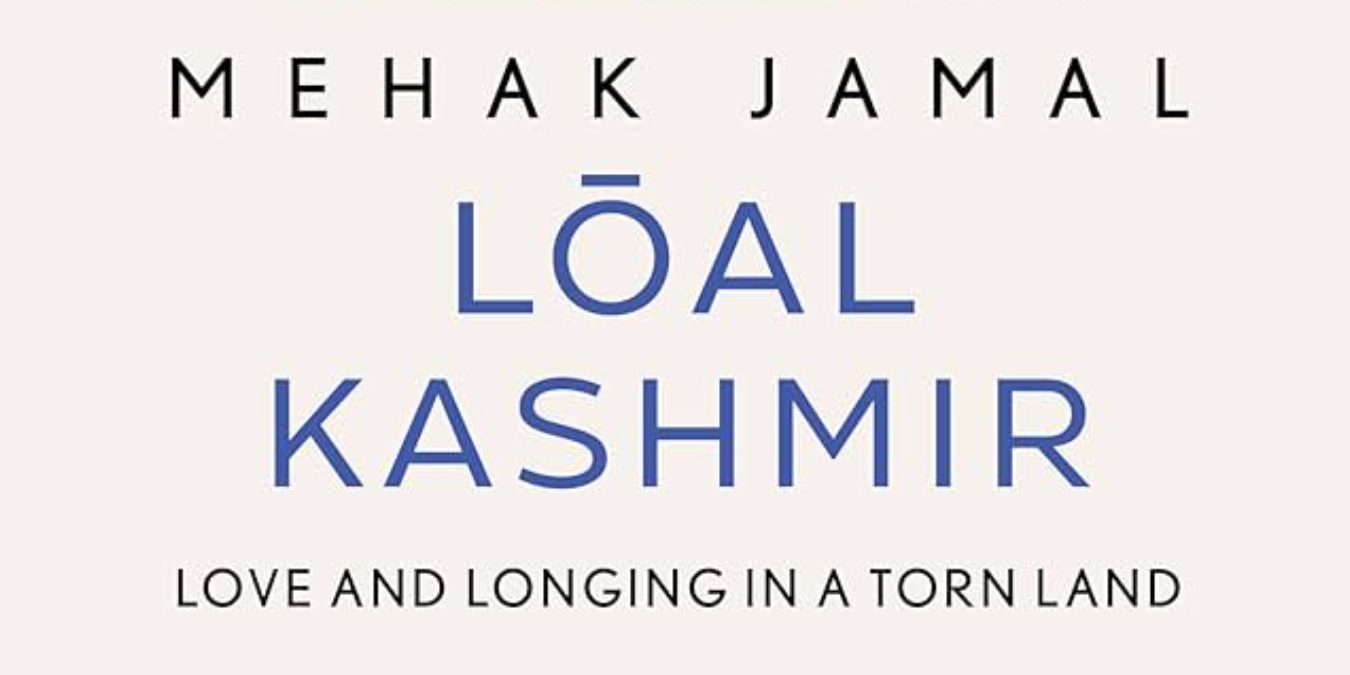
“Lōal Kashmir: Love and Belonging in a Torn Land” is the debut novel of Mehak Jamal in which she traverses various stories of lovers courageous enough to love in the land of conflict. She documents real-life stories of friends, couples and families, portraying how they navigate and unfold their relationships in the midst of the volatile political atmosphere of the valley. Mehak, with the help of sixteen stories, depicts how love continues to thrive despite the predicaments and heinousness faced by the people of the region. She subtly chooses to study the survival of love, the universal emotion, to illustrate how new versions of normalcy are carved and fought for, regardless of the turmoil that embraces Kashmir. She further highlights the impact of militarization on relationships and how people navigate and reshape the norms related to romanticism and intimacy. The author effectively achieves this by studying the accounts of love and belonging, managing to capture the complexities of Kashmir while retaining a sense of hope.
Jamal divides the book into three parts: ŌTRÜ (day before yesterday) includes the stories that unfold in the backdrop of the 1990s insurgency. RĀTH (yesterday) showcases the turmoil that emerged due to civil unrest in 2010, and the final part, AZ (today), which presents the stories of the current times, post-2019, after the government abrogated Article 370, thus nullifying the constitutional status of Kashmir, leading to a complete communication blockade and months-long lockdown in the region.
Jamal’s main aim is to show the world how daily life amidst the conflict is dictated by curfews, restrictions and blockades. She focuses mainly on how months-long communication and internet blockade imposed by the government affects the people of the region, separating them from the outside world. For instance, in “Visa”, Zara’s American Visa is rejected indefinitely, forcing her to stay in Srinagar with no access to information of the outside world due to the ongoing internet blockade, resulting in a setback in her academic endeavours. The communication blockade also severed her contact with her husband, whom she had married recently. However, she doesn’t give up and chooses to hope despite the ugliness of the situation. Similarly, “Flight or Fight” revolves around the story of a flight attendant whose simple wish was to connect with her family, but due to an abrupt internet blockade, this simple wish looked more like an arduous mission. Despite the anxious uncertainty, she finds solace among the other Kashmiris away from home, bonded by the similar agony and despair.
Mehak has also highlighted the impact of a sudden communication blockade through other narratives that happened in the backdrop of the abrogation of Article 370. In “I will walk to you if I have to", Beena’s denial to believe her fiancé regarding the aftermath of abrogation was soon turned into fearful acceptance when their call snapped midway and didn’t connect for months. Furthermore, in “Ambulance”, Iqra questions in a rather satirical way whether Kashmiris will survive after the early rumours of abrogation start to spread in every nook and cranny of the valley. The complete communication blockade later also affects the survival of her love, still, despite these predicaments, they find a way of communication by exchanging letters, which becomes their way of rebellion- a stubborn act of protecting their love amidst the turmoil. Through these stories, Jamal actually tries to showcase the life surrounding the conflict, how emotions are reshaped, how people are forced to navigate their relations with their loved ones, their silent sacrifices followed by acceptance and particularly the sentiments of Kashmiris regarding the abrogation of Article 370, which was different from what the media portrayed.
Being born in the same region, Lōal Kashmir feels more than just a novel, highlighting collectively what we all yearn for- for the people to understand that the children of conflict aren’t stripped of emotions, but they find their own way to navigate them, reshaping and moulding them in an acceptable form. Despite the situation, they still are humans with the same desire, same sentiments and nostalgia. They also yearn, they also dream, and they also love. As Arundhati Roy wrote, “Human beings were creatures of habit, and it was amazing the kind of things one could get used to”. In a way, Kashmiris have also become used to the dichotomies and predicaments surrounding their lives, whilst not losing the fragments of normalcy woven with emotions, love and nostalgia.
The shared sense of conflict and grief is what bonds the people of Kashmir, turning the universal emotions of love and belonging into their greatest weapon against oppression; a subtle source of rebellion braided together by the shared experience of agony, separation and survival. In the introduction part of the book, Mehak questions whether Kashmir belongs to her. It is only later that she arrives at a rather beautiful realisation that “Kashmir belongs to lovers and I am one of them". Lōal Kashmir is her love letter to Kashmir, and this review is born out of the same rebellious love that Kashmir continues to inspire in its people. As Agha Shahid Ali wrote, “Mad heart be brave!” This book brings together the accounts of those mad, passionate, brave hearts who continue to love, endure and hope against all odds, no matter what comes their way. In the end, it is safe to say that Kashmir survives because of these mad hearts- people whose resilience and unwavering hope keep its spirit alive.
Syedah Khadeeja is pursuing her Bachelor’s from Jamia Millia Islamia
Edited by: Mohammad Arham
"Disclaimer: The opinions expressed in this Publication are those of the author. They do not purport to reflect the opinions or views of The Jamia Review or its members."