
Plato’s Republic insists that only minds trained rigorously in dialectic and practised at interrogating their own convictions have earned the right to hold power over others. The philosopher king rules because he has learned to think about thinking and has an unquenched thirst for knowledge and wisdom. India’s universities have suffered the exact opposite of this vision. The state has not cultivated future guardians through patient thought and value; it has instead moved to silence the teachers, students, historians and philosophers whose training most resembles the discipline Plato demanded of rulers, keeping the machinery of authority while discarding the thinking meant to justify it.
The anxiety in learning that the Indian university now stands where it stood during the darkest constitutional interval of the republic’s history hints at one of the most substantial losses for Indian academia. The Academic Freedom Index, compiled annually by the V-Dem Institute in collaboration with the Scholars at Risk Network, has placed India in 2026 among the bottom fifth of 179 countries and territories surveyed, with its composite score having fallen from near 0.65 in 2012 to a mere 0.14 today. Researchers describe this as the lowest recorded level of academic freedom in India since the index began in 1900, a level that falls even below the Emergency years of 1975 to 1977, when censorship was declared, and constitutional rights were formally suspended. That the university should now be freer on paper and less free in practice than it was under an acknowledged authoritarian government is the powerful argument that one should consider.
The index measures five things: the freedom to research and teach, the freedom of academic exchange and dissemination, institutional autonomy, campus integrity, and the freedom of academic and cultural expression, and every one of these five indicators has fallen since 2015. Campus integrity, which analyses whether universities remain free of politically motivated surveillance and security intrusion, has fallen furthest of all. The numbers describe, in aggregate, the record of the last decade, and it is worth taking a close look at the statistics to get to the bottom of things.
Starting with the faculty, since it is the faculty who are meant to embody the university’s claim to independent thought. The Indian Academic Freedom Network has documented sixty-two teachers penalised between January 2014 and April 2026 for opinions expressed in public or in the classroom, ten of them terminated outright, sixteen suspended, twelve forced into resignation, and twenty-one arrested, with several cases still before the courts (Najeeb, 2026). A professor at the Central University of Kerala was suspended in 2021 for remarks critical of the Rashtriya Swayamsevak Sangh and made to sign a letter of regret before he was reinstated. A professor at Ashoka University was arrested in 2025 for comments made amid the government’s messaging around Operation Sindoor, his offence being criticism of mob violence directed at Kashmiris. At Jamia Millia Islamia, a professor was suspended in December 2025 for the crime of setting an optional examination question on atrocities committed against Muslims in India, which the Jawaharlal Nehru University Teachers’ Association condemned as an unacceptable policing of academic thought carried out under a disciplinary order that could not even specify what negligence had occurred. Twenty-eight academics currently face charges under sedition provisions or the Unlawful Activities Prevention Act. All of this reads as a method, applied with consistency across institutions, that any teacher who has watched a colleague suspended for a sentence now knows, without doubt, which sentences are safe to write on an examination paper and which are not.
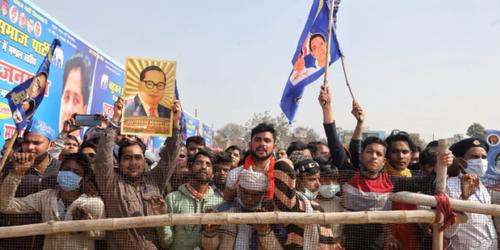
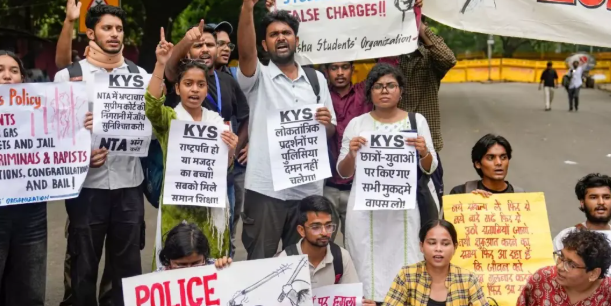
The students have fared no better, and their treatment matters because it demonstrates that the apparatus of control does not stop at the lectern. In February of 2025, seventeen students at Jamia Millia Islamia were detained and suspended for protesting without ‘permission’, a word that signals that dissent on campus now requires clearance from the very authority it might be directed against. Seven of those students sought relief from the Delhi High Court and had their suspensions stayed, a small mercy that depended on judicial intervention rather than institutional restraint. At Banaras Hindu University, fourteen students were suspended in October, stripped of hostel accommodation and library access, for having protested a year earlier over the alleged gangrape of a fellow student at IIT BHU, and by doing so having disturbed the academic ambience of the campus. When a university’s central complaint against its own students is that they disturbed an ambience, the university has told you plainly what it values above the grievance the students were raising.
A subtler mechanism operates alongside outright suspension, and it is the quiet cancellation of the speech a university never gets the chance to hear. In January of 2026 a lecture on the revolutionary Odia poet Bhima Bhoi, to be delivered by the journalist and poet Kedar Mishra under Banaras Hindu University’s Kabi Samrat Upendra Bhanja Odia Chair, was cancelled after Mishra had already arrived on campus as a guest, an act the opposition Biju Janata Dal alleged was carried out under pressure from the Odisha government acting in coordination with Bharatiya Janata Party leaders in Uttar Pradesh, where the university sits. A speaker at Mumbai University was uninvited the day before a scheduled talk, the cancellation attributed to a senior official uneasy about the speaker’s open criticism of the government. At the Indian Institute of Technology Delhi, an investigation was opened into a seminar on caste and race after some faculty objected that a technical institute had no business hosting the question at all. Each of these episodes is small enough to be forgotten within a news cycle, and that is precisely their function, since a pattern of small closures accumulates into a campus culture where organisers begin pre-emptively narrowing who and what they invite, long before any government official needs to make a phone call.
If the faculty and the students represent the present tense of this decline, the curriculum represents its attempt to rewrite the past tense as well. Since 2022, the National Council of Educational Research and Training has revised textbooks for classes six through twelve under the government’s National Education Policy, trimming or removing substantial material on the Delhi Sultanate and the Mughal emperors, and softening references to the Gujarat riots of 2002 and the demolition of the Babri Masjid in Ayodhya. NCERT’s director has defended these changes as routine rationalisation undertaken by subject experts to reduce the burden on students, insisting there has been no attempt at what critics call saffronisation and no imposition from above. Over two hundred historians from Indian and international universities signed a joint statement rejecting that defence, arguing that the selective removal of inconvenient chapters amounts to a negation of history rather than its simplification, and that a syllabus which quietly drops the Mughals while retaining the Bhakti and Sufi movements has made a choice about which past the republic’s children are permitted to inherit. A curriculum is presented as a fact children are given no reason to question, which is what makes it the most durable instrument of ideological control.
The final front is institutional rather than individual, and it concerns who gets to choose the people who run these universities in the first place. The University Grants Commission’s 2025 draft regulations propose that the Chancellor, ordinarily the state Governor and therefore a political appointee of the centre, should constitute the search committee for Vice Chancellor appointments, a role previously distributed more broadly across university bodies. The regulations further open the Vice Chancellorship itself to professionals from industry or public administration with no academic background at all. Kerala’s Chief Minister has called this a means of installing ideological loyalists under the cover of merit reform. Opposition-ruled states including Tamil Nadu and West Bengal have argued the regulations violate the federal structure of a Constitution that places education on the Concurrent List precisely so that no single authority could capture it entirely. Whatever the regulations’ stated purpose, their practical effect is to move the final word on who leads a university away from the university and its faculty and toward the political executive that appoints its Governors, which is the central government of the day. The result is clear: when leadership answers to the state, the university cannot protect the teacher whose lecture displeases it or the student whose protest embarrasses it. Institutional autonomy, the index’s own framework insists, is the precondition on which every other freedom depends.
None of this occurs in isolation from the world, and it would be a mistake to treat India’s decline as a peculiarity of the postcolonial state rather than an instance of a wider authoritarian pattern. Nitasha Kaul, a British Indian academic at the University of Westminster, was denied entry to India ahead of a conference she had been invited to address. The Delhi University historian Apoorvanand Jha was refused permission to travel abroad for a seminar after he declined to have his paper vetted by the Ministry of Education, a denial he called, with evident irony, a case of the university surrendering its own autonomy willingly. The V-Dem researchers who compile the index have been careful to note that the United States too has seen a marked decline in academic freedom since 2019, driven by political polarisation rather than a single dominant party, which should complicate any comfortable assumption that this is a disease of fragile democracies alone. Scholars at Risk’s own Free to Think report for 2025 places India among sixteen countries and territories it identifies as showing concerning developments, and states plainly that the ruling party has acted to extend its authority over the higher education system in ways that undermine university autonomy while imposing what the report calls a Hindu nationalist agenda over campuses. Two independent networks, one quantitative and one built from case documentation, arrive at the same conclusion from different methods. What distinguishes India’s case is not that it is unique but that its decline has been so steep and so sustained across a full decade that it is no longer possible to sit idle and believe that we are on the right track.
Although we have had enough evidence to not consider this serious downfall in academic standards as arising from natural or unforeseen causes, commentators sympathetic to the government have pointed out that Indian campuses remain visibly contentious, filled with protest and argument and student politics of every ideological stripe, and have asked how a system so alive with dissent can be called repressed in the same breath as war-torn states or single-party regimes where no dissent is heard at all. They note too that enrolment in Indian higher education has expanded substantially over the past decade, which is true and worth acknowledging. But this objection mistakes the core of the argument. A campus can host a thousand protests and still be repressive if the outcome of those protests is suspension, arrest, or the loss of a hostel room, because what the index measures is not whether dissent occurs but what happens to the people who voice it afterwards.
We now see that every mechanism discussed above traces back to the same institutional lineage. The Rashtriya Swayamsevak Sangh has supplied the ideological framework, and the Bharatiya Janata Party has spent a decade translating it into policy, its student wing, Akhil Bharatiya Vidyarthi Parishad providing the campus muscle that disrupts lectures and files complaints against dissenting faculty, its intellectual affiliates supplying the language of saffronisation that NCERT’s revisions now enact through curriculum rather than decree. The correlation with BJP’s coming into power and the steady downward trajectory of academic freedom from around 2014 is the visible signature of an organisation that has always understood the university as a battlefield for the national imagination it wishes to project, and that has used a decade in government to move from criticising that imagination’s custodians to formally disciplining them, replacing the slow persuasion the Sangh once relied upon with the harder instruments of suspension, arrest, and appointment that state power now makes available to it. (May be removed if deemed unfit by the editors)
What emerges from faculty suspensions, student detentions, cancelled lectures, rewritten textbooks and captured Vice Chancellorships depicts how the very structure of a university is re-moulded to answer to the state rather than to the truth. An index score of 0.14 is a serious wake-up call and a diagnosis of an institution that has forgotten, or been made to forget, that its only legitimate authority was ever the authority of the argument that could withstand scrutiny, and a republic that allows its lecture halls to forget this should expect the amnesia to spread and destroy, since a nation rarely protects, when it has already stopped protecting in its universities.
References:
- Najeeb, H. (2026, April 29). Forced resignations, suspensions, threats, imprisonment: India’s shrinking academic freedom. The Wire, 29 Apr. 2026. https://thewire.in/rights/forced-resignations-suspensions-threats-imprisonment-indias-shrinking-academic-freedom
- Academic Freedom Index. Academic Freedom Index Update 2026. Friedrich Alexander Universitat Erlangen Nurnberg and V Dem Institute, 2026, academic-freedom-index.net/research/Academic_Freedom_Index_Update_2026.pdf
- “Delhi HC Stays Suspension of Protesting Jamia Students, Calls University Action ‘Worrisome’.” The Wire, 5 Mar. 2025, thewire.in/rights/delhi-hc-stays-suspension-of-protesting-jamia-students-calls-university-action-worrisome
- “14 BHU Students Suspended for ‘Disturbing Academic Ambience’ During 2023 Protests over IIT BHU Gangrape Case.” ThePrint, 3 Mar. 2025, theprint.in/india/14-bhu-students-suspended-for-disturbing-academic-ambience-during-2023-protests-over-gangrape-case/2295452/
- “Naseeruddin Shah ‘Disinvited at the Last Moment’ From Mumbai University Event.” The Quint, 5 Feb. 2026, thequint.com/news/breaking-news/naseeruddin-shah-disinvited-mumbai-university-event.
- “Why Discussing Caste Is a Crime: Faculty, Scholars Shocked by IIT Delhi Probe on Conference.” ThePrint, 27 Jan. 2026, theprint.in/india/why-discussing-caste-is-a-crime-faculty-scholars-shocked-by-iit-delhi-probe-on-conference/2837863/.
- Kumar, Abhijeet. “No Delhi Sultanate, Mughals in Books: A Look at Past NCERT Syllabus Changes.” Business Standard, 28 Apr. 2025, business-standard.com/india-news/ncert-revises-class-7-history-syllabus-no-mughals-or-delhi-sultans-cbse-125042801049_1.html
- “‘Sanitised History’: Historians from Indian, Foreign Universities on NCERT Textbook Revision.” Careers360, 8 Apr. 2023, news.careers360.com/ncert-textbook-revision-class-12-history-historians-indian-du-jnu-foreign-universities-raise-concerns
- “Explained: Why TN, Kerala and Karnataka Are Against the UGC Draft Regulations.” The News Minute, 24 Jan. 2025, thenewsminute.com/news/explained-why-tn-kerala-and-karnataka-are-against-the-ugc-draft-regulations
- “UGC’s New Draft Framework for Vice Chancellors Faces Southern Heat.” The South First, 10 Jan. 2025, thesouthfirst.com/kerala/ugcs-new-draft-framework-for-vice-chancellors-faces-southern-heat/
- “‘Immigration Officials Spoke of Orders From Delhi’: Academic Deported Ahead of Karnataka Govt Event.” The Wire, 26 Feb. 2024, thewire.in/rights/nitasha-kaul-kashmiri-academic-uk-deported-denied-entry-karnatak
- Scholars at Risk. Free to Think 2025. Scholars at Risk Academic Freedom Monitoring Project, Sept. 2025, scholarsatrisk.org/wp-content/uploads/2025/09/SAR_F2T2025_R5.pdf
- “India’s Academic Freedom Lowest Since 1900 — Worse Than During the Emergency.” ThePrint, Aug. 2026, theprint.in/feature/indias-academic-freedom-lowest-since-1900-worse-than-during-the-emergency/3005276/
- Sethy, Itishree. “BJD Slams Odisha Govt Over Cancellation of Kedar Mishra’s Lecture.” Pragativadi, 20 Jan. 2026, pragativadi.com/bjd-slams-odisha-govt-over-cancellation-of-kedar-mishras-lecture/
- DATA TABLES from “India Academic Freedom Network”. https://www.indiaacademicfreedom.net/resources. Six tables documenting the decline of academic freedom in India, compiled from research and inputs by Nandini Sundar (2018, 2020), Sumit Kumar and Rajat Sonkar (2020), Ananya Redkar (2021), Mohona Chaudhuri, Madiha Iqbal, and Uttam Kumar (2022), Ateen Das, Saniya Rizwan, and Arul Singh (2023), Ashwin Thomas, Tulip Bannerjee, Samra Iqbal, and Vedant Nagrani (2024), and Lavanya Senthil and Vedant Nagrani (2025 onward). First published on The Wire. Individual tables: Censorship of Books and Interference with University Syllabi. Denial of Permission and Disruption of Seminars, Meetings, and Events on Campus. Suspension and Termination of Faculty and Students. Arrests of and Criminal Charges Against Faculty or Students. Denial of Research Visas and Restrictions on Academic Exchanges. Physical Attacks on Students and Faculty.
Joel K. Albert is pursuing his Master's in English from Jamia Millia Islamia.
Edited by: Sritama
Disclaimer: The opinions expressed in this Publication are those of the author. They do not purport to reflect the opinions or views of The Jamia Review or its members.