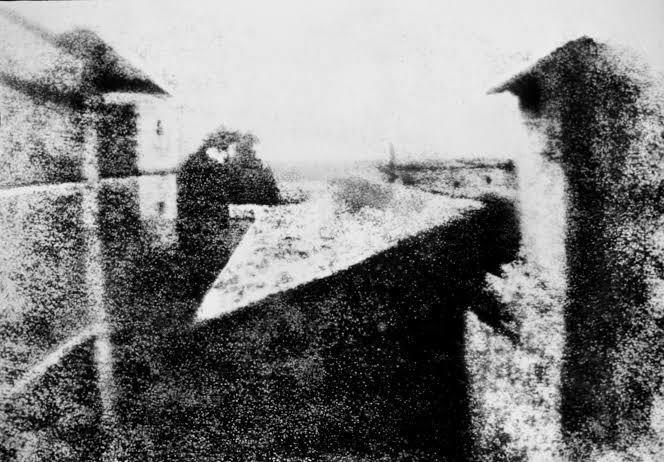
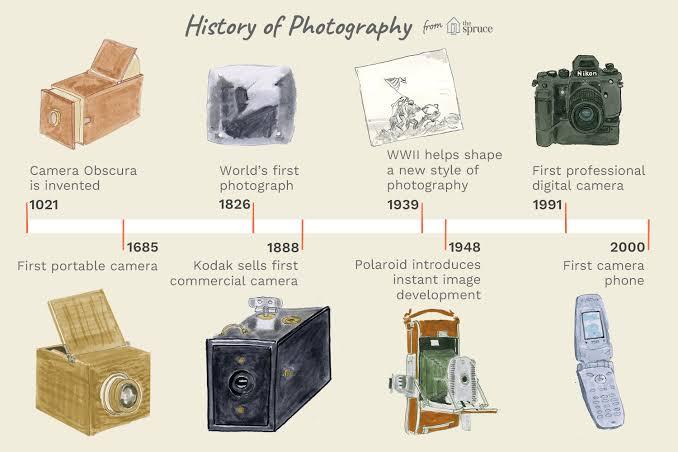
One of the conceivably cherished inventions of humankind is the camera. Making its way in the eleventh century, with camera obscura; ancestor of the photographic camera, as it is labelled, the box with a mere hole and some light took a run through centuries to become a part of the mundane and the magic of everyday human life. At long last in the nineteenth century arose the notable leap that came to a head through the combination of the camera obscura with a material, that altered on exposure to light and preserved the image. This is how the earliest permanent photograph, View from the Window at Le Gras, was taken by Frenchman Joseph Nicéphore Niépce in the summer of 1826 at Saint-Loup-de-Varennes.
An art of lights and shadows flinging through a lens to capture a moment for the times ahead; and for its admirers, the penumbras of the eye preserved, photography encompasses all other art forms. Photography progressed to its modern form out of a rough-hewn process that used caustic chemicals and unwieldy cameras in a brief span of history. Interestingly, the first ‘cameras’ did not snap pictures, neither were they meant to do so. The camera obscura dates back to the time of the Arabic scholar and physicist Ibn Al Haytham and his study of optics. Latinised as Alhazen, he used the camera obscura to demonstrate the formation of images on flat surfaces by light.
Joseph Nicéphore Niépce developed the first photographic image in 1827 using bitumen as the light-sensitive substance and a chemically polished metal alloy plate as the base. The procedure took him eight hours, presently believed to be several days, for exposure in the camera. Nonetheless, it was here that the basic principle of photography was born. The actual chemistry required to record an image was interpreted, soon after which, Niépce accompanied by Louis Daguerre refined the process. In the following decade Daguerreotype process developed, which brought the exposure time down to a few minutes. In 1839, exclusive details concerning the process were made public. This procedure marked a breakthrough in practical photography and soon spread all over the US and Europe.
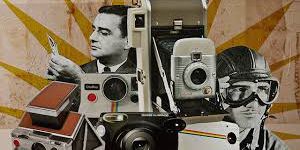
By the 1850s, pictorial processes evolved, and by the 1870s, dry plates replaced wet plates. The following century led to the refining of the chemicals and the machinery. Photographic prints progressed through a succession of cellulose nitrate roll films, simple linen rag papers, and resin-coated water-resistant paper while shifting from organic dyes to stable colour pigments. Over the decades, photography evolved step by step, and parallel to it, the camera, though with its fundamental principle unaltered, changed from olden to modern, with the brush up of the roll films. Camera formats were taken into hands by several companies that have perfected them up till this time. For instance, the Kodak in the US, Nikon and Canon in Japan, and the German Leica and Zeiss Ikon.
Now, not less than two hundred years after Joseph Nicéphore Niépce’s View from the Window at Le Gras, we can capture as many photographs as we want and record as many moments as we set our hearts over. All these montages of the time unknowingly travel hundreds of years back to tens and tons of people and when all the days nestled the chemistry of this artform in the darkest rooms under the brightest lights with dewy-eyed hours of passion and calm.
Taizeem Bilal is a student pursuing English Literature from Jamia Millia Islamia.
Edited by: Maryam Hassan