
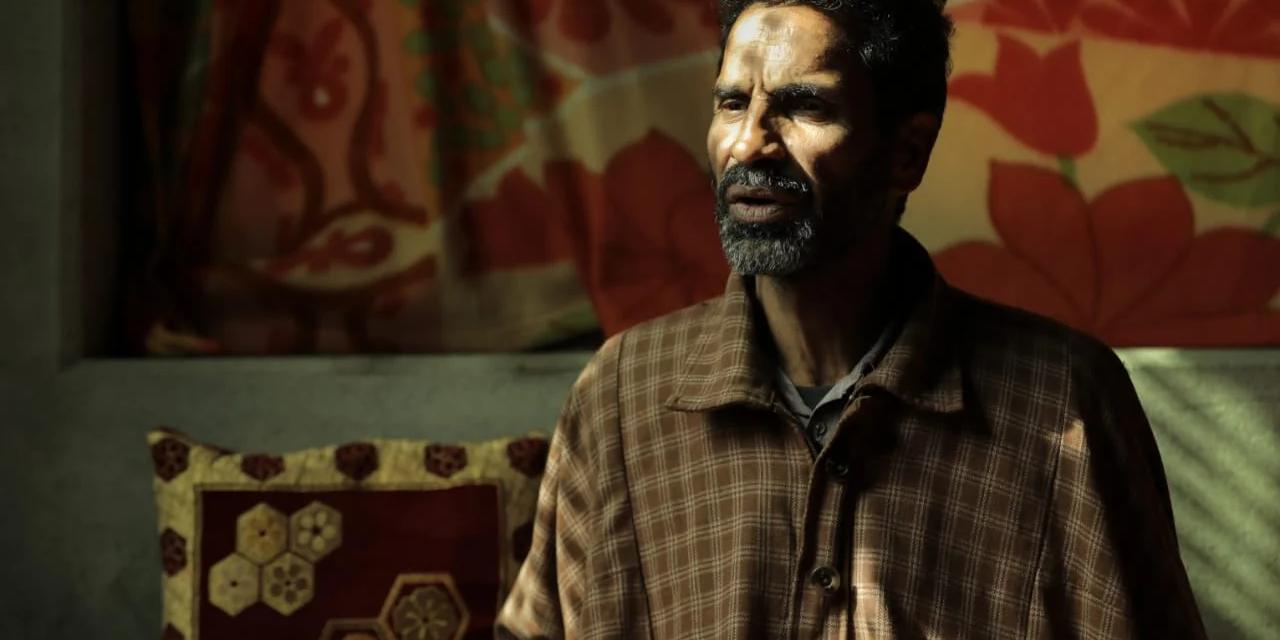
In this literary profile, we trace the writing life of Madhosh Balhami, a poet from Kashmir's troubled valley, who got the attention of mainstream media only after his three decades of poetry went up in smoke.
In the saffron-growing village of Balhama, a farmer's son named Ghulam Mohammad Bhat, born in 1966, picked up a pen decades ago and became, to those who know his work, Madhosh Balhami, a poet of Kashmir. Balhami began writing poetry at age 20, driven by his father's sudden death. His earliest works included confessional poetry and naats, devotional lyrics in praise of the Prophet Muhammad, long before political thoughts took hold.
However, his poetry took on a new dimension in the 1990s, when violence escalated in the valley. Having experienced the effect of the situation first hand through an encounter with the police on a usual day in his home, Balhami from that moment realised how the valley was being exploited and oppressed. After this particular episode, he had further violent encounters with security forces. Balhami spent approximately seven years of his life in prison across multiple arrests. But has never been a militant, only a poet.
For most of his writing life, Balhami stayed unknown outside his own circles and rose to prominence only after his house and more than three decades of his work were destroyed in a crossfire between armed militants and Indian security forces in 2018.
“He is a poet who has lived through every line of his poetry,” Rashid Maqbool, a long-time reader of his work, said to The Caravan. Balhami criticises the Indian security establishment and the local regional power holders alike through his verses. He has also criticised the Hurriyat leaders in particular, labeling them as “big men with small hearts”.
Back in the day, religious gatherings and separatist rallies used to be his stage, finding an audience. He dared not to publish his political poetry, though, due to security concerns.
Nonetheless, he continued to write poetry in Kashmiri or sometimes in Urdu: love poetry, nationalist poetry, and elegies called marsiyas. He published two books from his collection: Sadaaye Abuzar and Dard-e-Furqat. Today only a few copies of them lie scattered among his friends in the valley.
Poetry and Politics:
“Mahraz be’dith gov te nikah naam mallan czhott
Mahrin ti yeli yeni wal’ie bronh prayi ti mye kheyi kath”
These verses lend themselves to more than one reading and interpretation. The 'maiden' here may refer to Kashmir itself coerced into one allegiance, desired by another, and blamed for choices that were never fully hers to make.
In another poem that translates roughly to “My city burned he recites
“One betrayed me after calling me its own
Another called me life before taking it away
Both of them are happy now, but my city burnt down”
(Translated from Kashmiri)
Balhami has profoundly expressed the situation of the valley and how it has been torn between the competing powers that shape it. His poetry has never chased fame and applause; it asks for something different that's to be understood and to outlive him as witness to everything he has been through and seen.
“Maybe when I die, my words will live on”, he told the Kashmir Walla in a 2019 interview. “Because what I write is not for me, but for my people. These verses are witness to events of history itself.”
References:
1. Sanna Irshad Mattoo, "A Kashmiri Poet Who Lost a Lifetime of Writing,"
The Caravan, 5 September 2018.
https://caravanmagazine.in/literature/kashmiri-poet-lost-lifetime-of-writing
2. Rashmitha Muniandi, "Madhosh Balhami: 'My Verses Are Witness to Kashmir's
History,'" The Kashmir Walla, 25 February 2020 (print edition,
22–28 July 2019).
https://thekashmirwalla.com/madhosh-balhami-my-verses-are-witness-to-kashmirs-history/
Toyiba Yousuf is a student pursuing a Multidisciplinary degree at Jamia Millia Islamia
Edited by: Arslaan Beg