
It is hope, aspiration, and the future generation that stands in danger, and not merely concrete and steel, when a university is threatened with demolition.
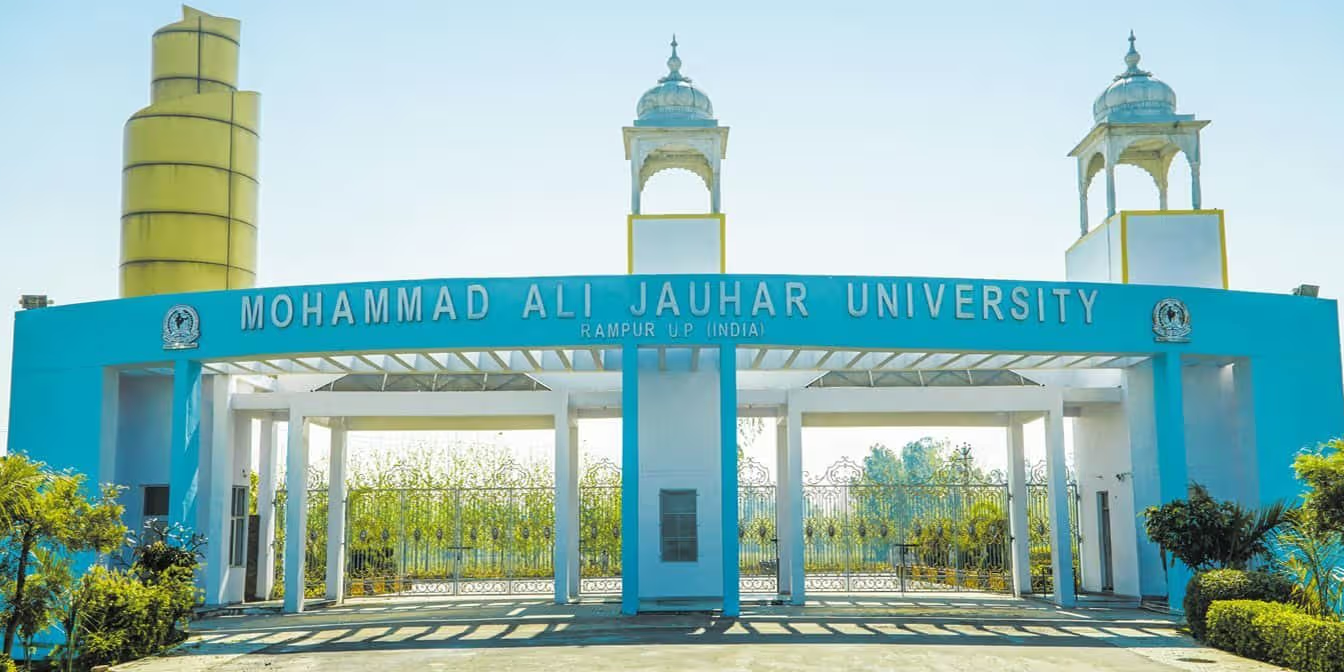
The proposed demolition of 38 buildings at Mohammad Ali Jauhar University in Rampur is not simply an administrative action over building approvals; it is a decision that could permanently destroy one of northern India’s most significant educational institutions established to expand access to higher education and could disturb the education of nearly 3000 students.
Mohammad Ali Jauhar University was conceived in 2006 by the Mohammad Ali Jauhar Trust, headed by Azam Khan of the Samajwadi Party, as a place of learning where students, especially those from economically and socially backward classes, could get higher education. The university has developed into a full-fledged educational institution with academic departments, hostels, libraries, laboratories, residential facilities and a medical college over the years.
Thousands of students have received their education at the same university and became doctors, teachers, lawyers, researchers and public servants.
Today, those dreams of many more students face an uncertain future.
Acting under section 27 of the Uttar Pradesh Urban Planning and Development Act, 1973, the Rampur Developmental Authority (RDA) has declared that there are only two buildings that possess the approved building plan, which are the medical college and one academic block. The remaining 38 structures are ordered to be demolished in 15 days as they have been categorized as unauthorized. Additionally, the authority has said that it will carry out the demolition itself and recover the costs if the university fails to do so.
The State Government believes that “this is just a proper enforcement of planning laws” and “no organisation or foundation can be above planning laws.” Respecting and obeying the rules is a vital component in a democratic system of government. But an equally crucial question needs to be answered: Should thousands of students lose their classrooms due to alleged administrative irregularities?
The heart of the controversy lies in the question.
According to the university administration, several institutions in dispute had been built before the Rampur Development Authority took over the area, and they deny the charges against them. At that time, the competent authority was the District Panchayat, which gave the approvals, according to the university. If this is the case, it is important to consider the legal implications in detail before taking what may be an irreversible action on the executive bench.
Amidst the confusion, the Public Works Department has set up signboards which state that a road running through the university campus is public. This has added to the concerns of many of the institution's supporters about the growing administrative pressure affecting the university on several fronts.
The current controversy cannot be separated from the legal and political tangles involving Azam Khan that have continued over the years. He has been accused of being involved in several criminal and civil cases over the past few years, with allegations of corruption, land encroachment, forgery and oddities in land acquisition as well. The government officials had claimed that land occupied by farmers, public utility land and even enemy property became part of the campus of the university. The Supreme Court has previously validated the cancellation of some land allotments after discovering irregularities in the process.
These legal proceedings must proceed as per law, and if proven violations, accountability must be ensured. But accountability has to be addressed toward those who are responsible, not toward innocent students who are victims of the controversy just because they chose to come to this University to study.
A university cannot be bulldozed just for the legal disputes of its founder.
Education is the property of the students, the teachers, the researchers, and society. When many young people start to shape their futures within an institution, the institution becomes a public trust that far exceeds any one person.
So, a lot of people think that the act of demolition is too severe a solution. In several places in India, planning violations have been handled through penalties, regularisation, approvals and changes to plans, and by changing the buildings themselves rather than destroying them. Why not use the same things here where a point of irreversible change can affect thousands of students?
The political response has also been strong. The Samajwadi Party has blamed the Uttar Pradesh government for targeting a handful of individuals and institutions linked to Azam Khan and issuing demolition notices against them in a politically motivated manner. This perception, regardless of whether it's true or not, has increased people's worry over fairness and equal treatment.
A lot of civil society groups and religious institutions are also talking about this issue. The All India Muslim Personal Law Board criticised the demolition notices for being biased, vindictive and not fair, saying that the move poses a threat to an institution, which has been doing a lot of work to promote educational opportunities in the Muslim community. Opposition leaders, such as Rajya Sabha MP Manoj Jha, have asked Prime Minister Narendra Modi to intervene, claiming the demolition of an existing University while considering permits for new ones is an overreaction.
But most potent have been the voices of the students themselves.
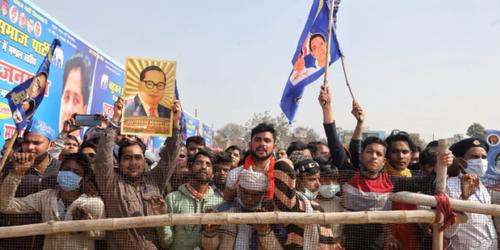
Peaceful protests were conducted by several teachers and students, requesting that their hostels, classrooms, labs, and libraries not be the victims of an administration's approval struggle. They are simply asking a question: why should their future be destroyed for things they have no control over?
They have a question, and it needs to be answered.
Educational institutions are not just public services but a core value of the Constitution, which gives people more power, lowers inequality, and enhances democracy. Governments invest in schools and universities, and invest in the future of the nation. Reconstruction of educational institutions is not easy or cheap when they are destroyed.
India has always said that education should not be cut down but should be expanded. Universities ought to be places where ideas are born, where students learn side by side, where knowledge overcomes division. No matter how the legal battles may be fought, the first attempt should be made to keep the educational function of an institution alive.
Where planning controls have been breached, there are many remedies available under the law, such as penalties, amended planning permission, compliance (where legally allowed), regularisation, and judicial supervision. Demolition should be used as a last resort, not a first resort, particularly when it is affecting the futures of thousands of students who have nothing to do with alleged violations and are not affiliated with any political party.
Mohammad Ali Jauhar University is not just buildings. It is the result of years of dedication and hard work by teachers, students, and families who have dreams and aspirations.
The nation has a decision to make as the 15-day deadline passes. It can enable bulldozers to decide what is right, or it can find a way to accomplish what is right and what is legal. These goals do not all necessarily have to be achieved at once.
The courts must resolve legal issues, and those found guilty of legal infractions should be held accountable under the law. The strength of justice should not be the only criterion to be used to measure it, but also the degree of care given to those who have done nothing wrong.
The rescue of Mohammad Ali Jauhar University isn't about protecting any one politician or political party. It is about the importance of maintaining educational facilities wherever possible, not letting students be caught up in political or legal battles, and ensuring that the search for justice is always accompanied by fairness, proportionality and compassion.
A university is a place that can be improved and changed. Administrative weaknesses can be rectified. Legal violations can be dealt with by due process. When classrooms are destroyed, though, the opportunities they've afforded thousands of young people may not be recreated.
Hijiet Rafiq is pursuing her Master’s Degree in English from Jamia Millia Islamia
Edited by: Mohammad Arham
Disclaimer: The opinions expressed in this Publication are those of the author. They do not purport to reflect the opinions or views of The Jamia Review or its members.